Start With the Risks On Your Site
Before you order anything, walk the property and note the actual hazards people meet every day. Look at entrances, loading bays, wet floors, stairs, plant rooms, electrical rooms, storage cages, wash areas and any point where visitors might move without supervision. A good safety sign answers one question quickly: what must I do, or what must I not do, here?
For business premises in Table View, Milnerton, Blouberg and across Cape Town, common needs include no smoking notices, emergency exit markers, fire point signs, electrical warning signs, mandatory PPE signs, forklift route signs and restricted access notices. If you have sand, salt air or high foot traffic, the sign needs to stay readable after repeated cleaning and exposure. A faded sign is usually as bad as no sign at all.
It helps to separate permanent hazards from temporary ones. Permanent hazards need fixed signs mounted at eye level. Temporary hazards, such as a wet floor during cleaning or a contractor work area, need portable or quickly changed signs so staff can act quickly and keep people out of trouble.
Choose the Right Sign Type for the Job
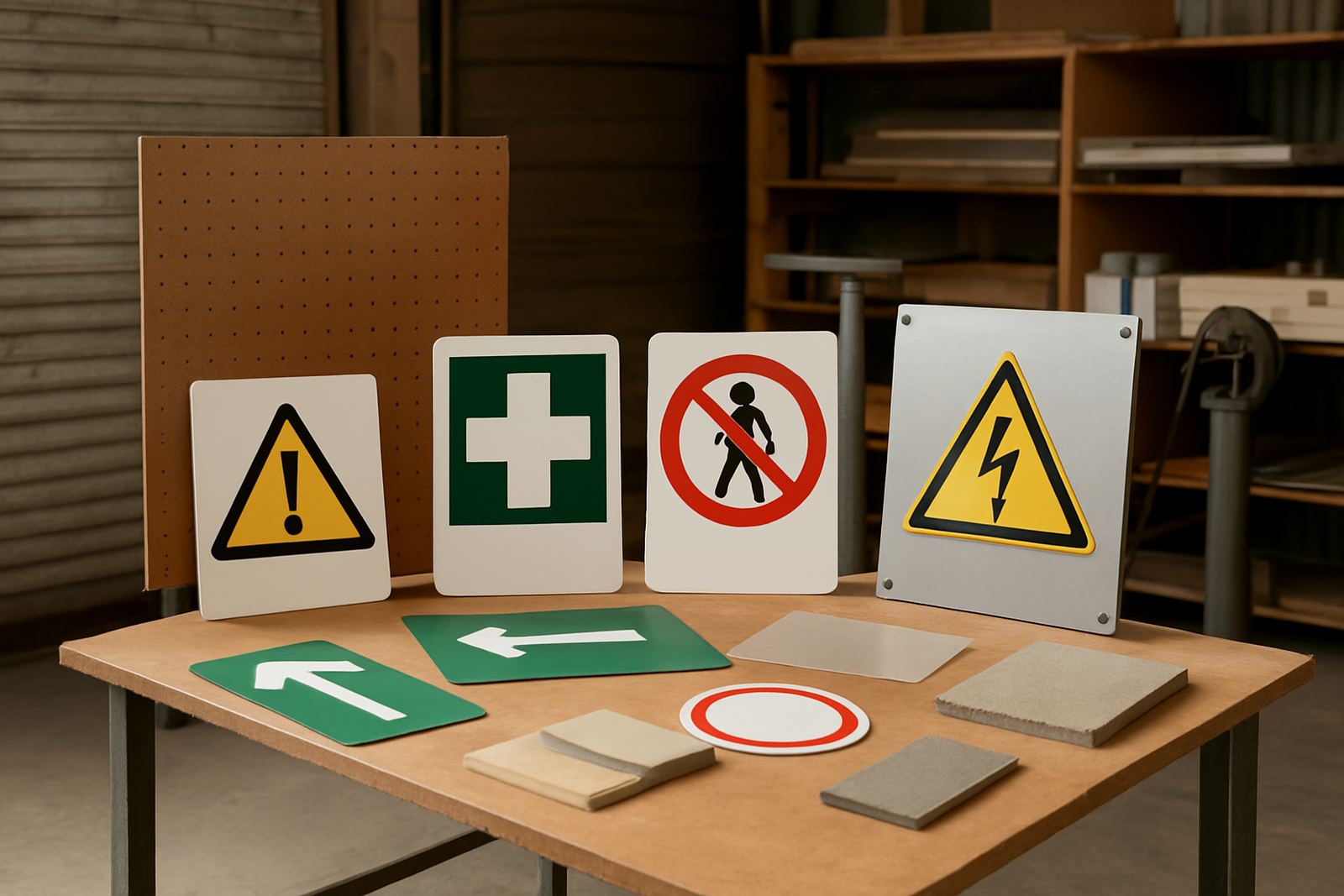
Safety signage is not one-size-fits-all. The material and fixing method should match the space, the weather and how often the area changes. In coastal parts of Cape Town, corrosion and moisture are real concerns, so a sign for an outdoor wall or gate should be made for long term exposure. Inside a warehouse, a lighter panel may be enough if the area is dry and controlled.
Ask what the sign must do physically. Does it need to be rigid and mounted permanently, or flexible enough to fit a door, post or machine guard? Does it need reflective finish for low light areas or night movement? Is the sign going onto a wall, fence, steel sheet, machine casing or glass? These details affect the substrate, fixing points and reading angle.
- Rigid board signs for walls, gates, fences and entry points
- Self adhesive decals for doors, panels and smooth indoor surfaces
- Reflective signs for yards, driveways and dim areas
- Engraved or routed signs for long term plant room and switchgear use
- Portable warning signs for cleaning, maintenance and short term hazards
If you are dealing with dust, washing, or frequent contact, ask for a harder wearing finish. For light boxes or illuminated areas, the text must still be legible when the surrounding light changes. That is a small detail but it matters when people are moving quickly.
Check the Message Before You Place the Order
Many sign problems start with unclear wording. Keep the wording short and direct. The sign should not try to explain too much. Use simple instructions like PPE must be worn, Authorised personnel only, Keep clear, No entry or Emergency exit. If the sign is for a specific machine or chemical area, include the exact requirement rather than a generic warning.
Before approval, check spelling, wording, icons, arrows and the direction of movement. A sign can be technically correct but still confusing if the arrow points the wrong way or the symbol is too small. If a notice is for a bilingual site, decide that at the start so both languages can be balanced properly instead of squeezed in at the end. A rushed layout usually looks cramped and is harder to read.
Also think about who reads the sign first. Staff, visitors, contractors and delivery drivers do not all know the site. If the message depends on local knowledge, add enough context to make it obvious. For example, do not assume people know which bay or gate you mean unless the sign is fixed right at that point.
Measure Placement and Visibility Properly
A sign only works if people can see it in time. Place it where the decision happens, not after the hazard. For a doorway, that usually means on or beside the door at eye level. For a loading bay, it should be visible before the vehicle reaches the point of risk. For stairs or ramps, the warning needs to be seen before someone commits to the step or slope.
Good visibility also depends on contrast and size. If the wall is busy or dark, a small sign will disappear. If the area is bright and open, a sign that is too small will be ignored from a distance. The height of mounting should suit the normal line of sight for workers and visitors, and if forklifts or vehicles pass through the space, the sign may need to be positioned higher to avoid damage.
- Measure the wall, post or gate before you order
- Check the viewing distance from where people approach
- Allow space for fixing holes, brackets or adhesive edges
- Avoid placing signs behind open doors, pipes or stacked stock
- Use a second sign where one approach path is not enough
In busy premises, the best results often come from using a simple sequence of signs rather than one large notice. A first sign warns, a second sign gives the instruction and a third sign confirms the restricted area. That is clearer for staff and contractors alike.
Prepare for Weather, Cleaning and Daily Wear
Coastal humidity, UV exposure, dust and repeated cleaning all shorten the life of poor quality signage. If the sign will sit outdoors in Blouberg, Milnerton or near the harbour side industrial areas, ask for materials and fixings that can handle moisture and corrosion. Stainless fixings, sealed edges and proper surface prep make a real difference over time.
Inside workshops or stores, chemical cleaners, oil mist and abrasion can still damage signs. If the site is washed down often, avoid finishes that lift or peel. For floors or low mounted signs, choose a surface that can be cleaned without the print fading after a few wipes. On sites affected by load shedding, keep in mind that emergency signs and exit markers must still be visible when the lights go off, so reflective or illuminated options may be needed.
Maintenance should be part of the buying decision. Plan for replacement panels, spare decals or updated inserts if your layout changes. A sign that can be refreshed quickly is far easier to maintain than one that has to be remade from scratch each time access routes shift or a new machine is installed.
Use This Buyer Checklist Before You Confirm
Once you have the hazards and positions mapped, run through a final check. This saves money and stops avoidable rework. It also makes it easier for the sign maker or workshop to quote accurately and manufacture what you actually need.
- What exact hazard or action must the sign communicate?
- Where will the sign be mounted and from what distance will it be read?
- Is the location indoor, outdoor, coastal or exposed to cleaning and chemical use?
- Does the sign need reflectivity, illumination or a tough protective finish?
- Are the wording, arrows, symbols and spelling approved before production?
- Are fixings, brackets, holes or adhesive suited to the surface?
- Will the sign still work if power is off or the area is dark?
If you are ordering for more than one site, group the signs by area and function so installation is faster. A single clear list also helps with future replacements. For business premises across Table View, Parklands, Durbanville, Montague Gardens, Paarden Eiland and Cape Town, that kind of planning keeps the site tidy and the signs useful. A well placed sign does not shout for attention all day, it simply prevents confusion before it starts.