A Busy Logistics Site Needed Clear Wayfinding
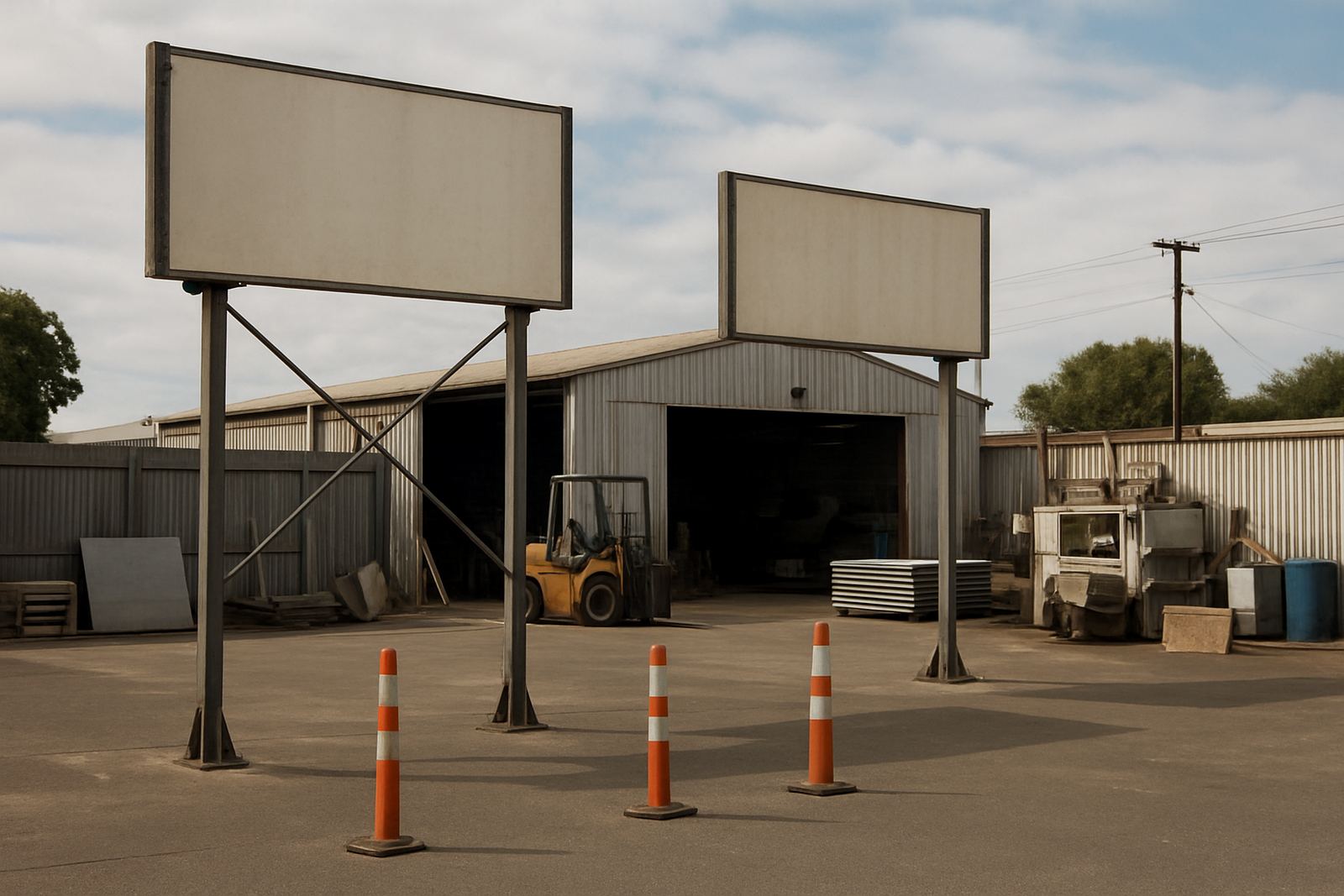
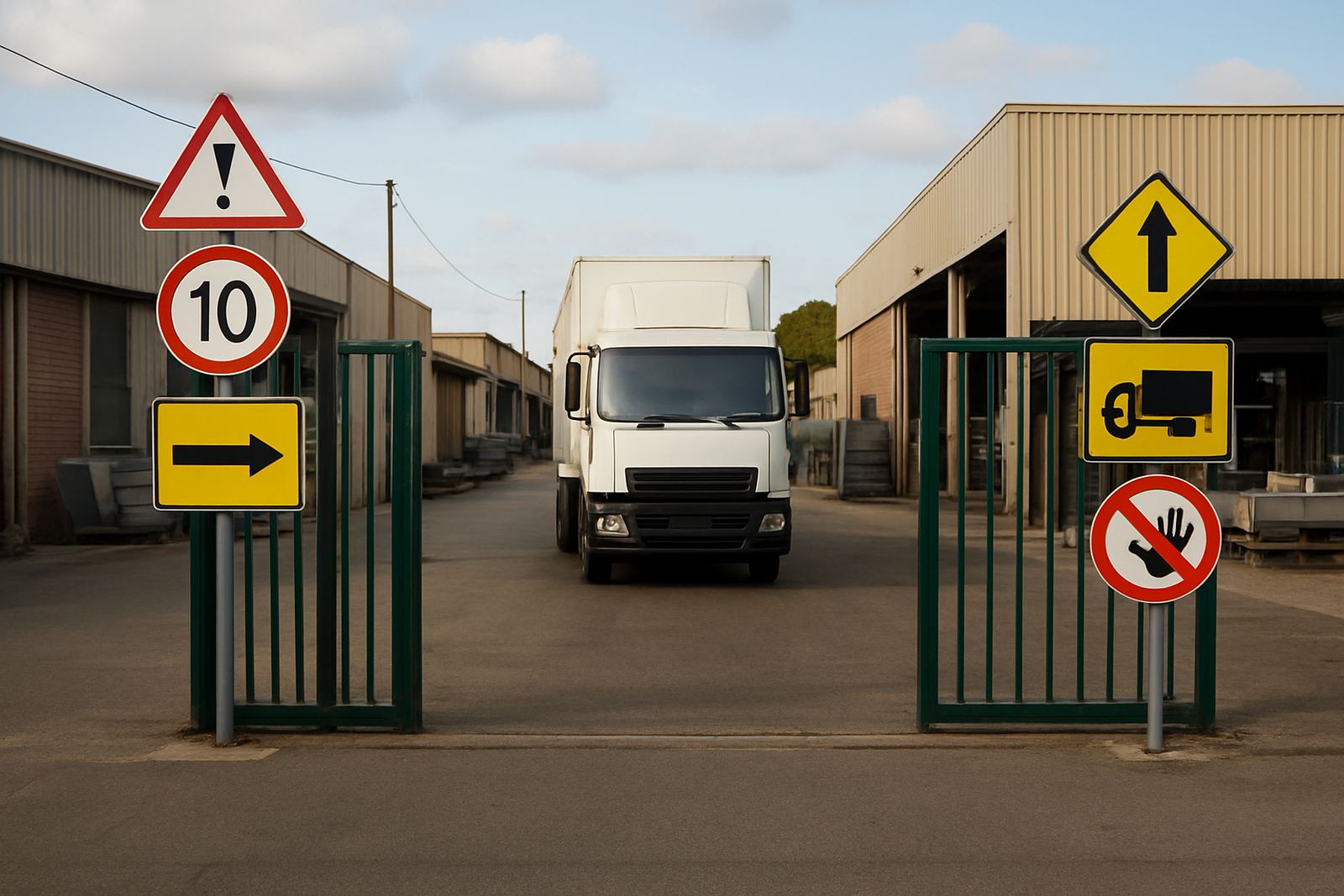
The client was a logistics operation in Epping, Cape Town, where trucks move in and out through narrow gates, yard staff work around tight turning circles, and visitors often arrive after dark. They needed a simple sign system that would reduce wrong turns, control vehicle flow, and make key safety points easy to see from the cab of a truck. The brief was practical: the signage had to work in bright daylight, during early morning deliveries, and in load-shedding conditions where site lighting is not always reliable.
We were asked to supply directional signage and reflective safety boards that would suit an industrial yard with daily dust, handling wear, and exposure to wind-blown moisture. The site also needed signs that could be mounted in positions where drivers would see them before entering loading areas, not after the fact. That meant clear sizing, strong contrast and a layout that could be understood at a glance.
The Brief, Measurements and Site Constraints
The site had limited wall space at the main entrance and several points where signs had to be visible from vehicle windows at an angle. There were also practical constraints around mounting height, existing steelwork, and the need to avoid blocking cameras, boom arms, and access routes. Because the yard operates with forklift traffic and long vehicles, the signs had to be set high enough for clearance but still readable from a moving vehicle.
- Directional signs for gate entry, loading bay approach, visitor parking, and vehicle circulation
- Reflective safety boards for no entry points, pedestrian caution areas, and restricted access zones
- Outdoor grade substrates suited to industrial use
- High contrast graphics for day and night readability
- Fixing points planned around existing structures and site access
We measured the install points, checked sightlines from likely approach routes, and confirmed the message hierarchy with the client before production started. That saved time later because there was no guesswork about where each board should go or how much space the arrows and wording needed. The client wanted the system to be easy for new drivers to follow, even when they were only on site for a short stop.
What We Supplied From Our Workshop
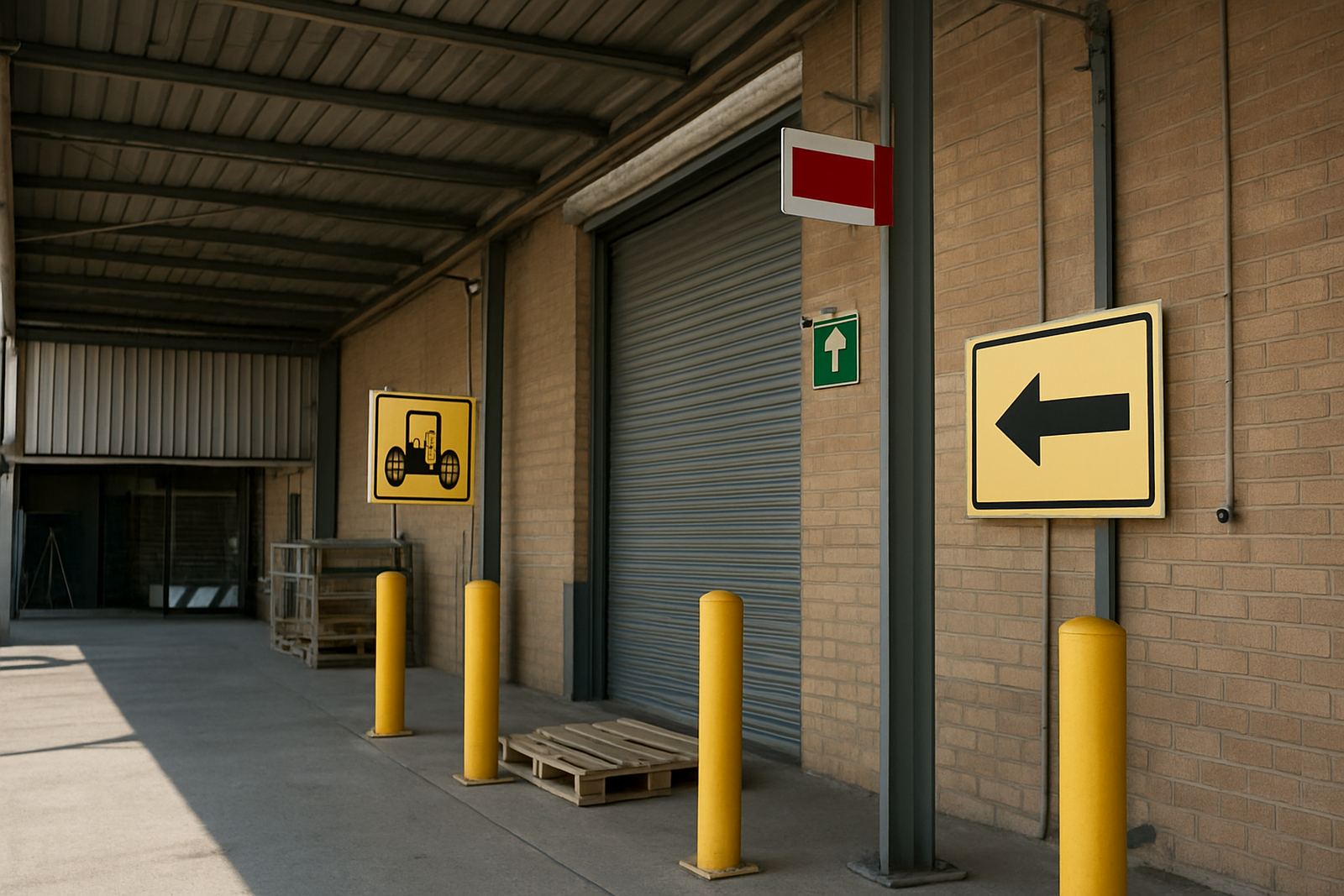
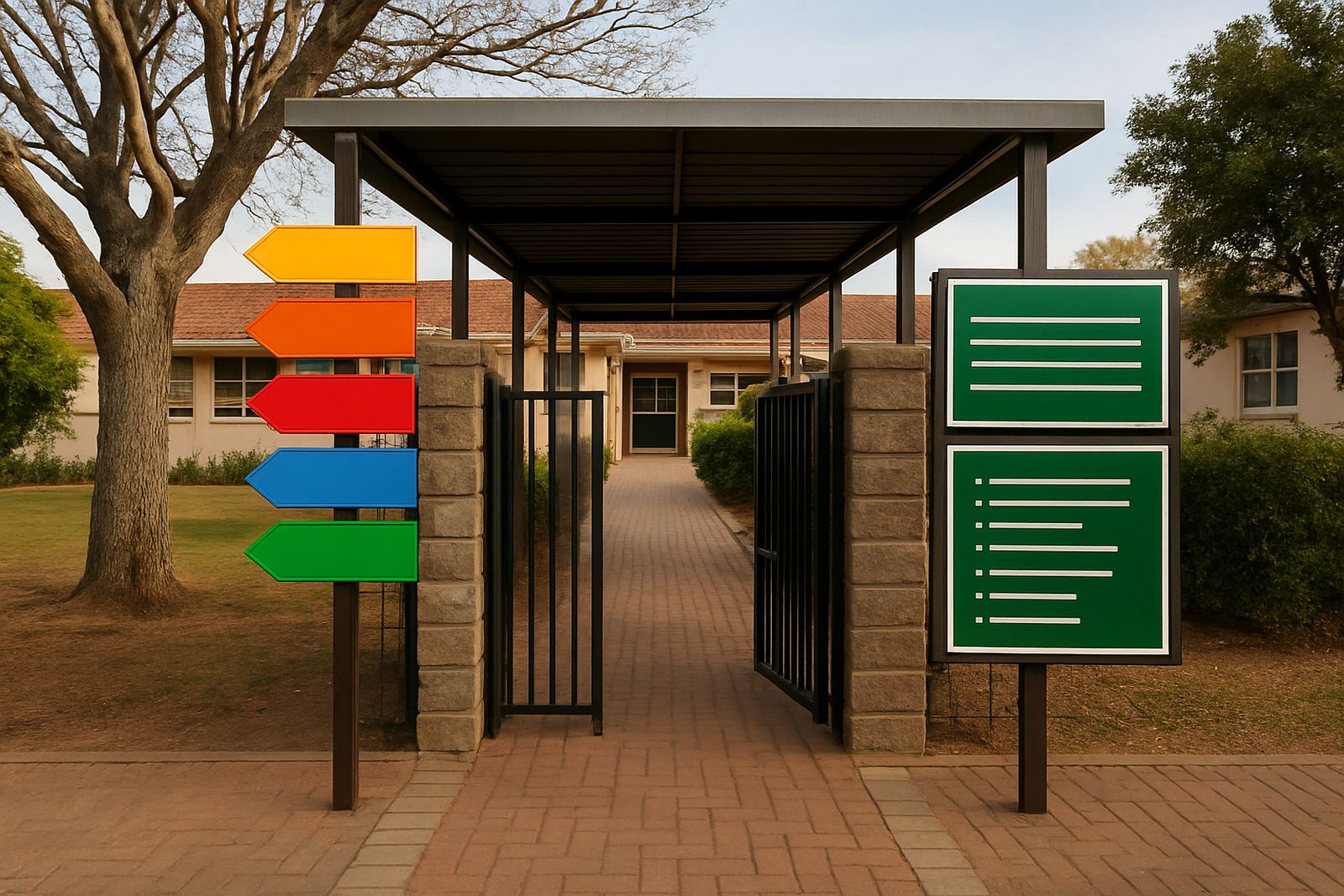
We manufactured the signs in our Table View workshop using rigid boards, cut lettering, and reflective face material where required. For the directional set, we used clear block wording and arrows with enough body size to stay legible from a distance. For the safety boards, we used high visibility colours and reflective elements so the signs would still catch vehicle headlights after sunset and during low-light conditions.
The work included cutting, finishing, application of graphics, and preparing the boards for installation. Some of the panels were made to fit specific wall bays and steel frames, while others were fabricated as standalone boards for fence line and yard positions. We also supplied mounting hardware suited to the surfaces on site, so the install team could work cleanly and avoid unnecessary drilling once on location.
- Directional wayfinding boards with arrows and location names
- Reflective warning boards for vehicle and pedestrian control
- Custom panel sizes to match the available fixing areas
- Weather resistant finishes for outdoor exposure
- Mounting preparation for steel, wall and fence fixing points
Installation In An Active Industrial Yard
Installation was carried out while the site remained operational, so the sequence had to be planned around truck movements and loading windows. We organised the work to minimise interruption and completed the mounting in stages, starting with the entrance points and then moving through the internal route markers. This approach helped the client keep traffic flowing while the signs were being fitted.
Our installer checked alignment, spacing, and visibility from the driver approach angles before each board was fixed off. In an active logistics setting, a sign can be technically correct yet still fail if it sits too low, turns at the wrong angle, or disappears behind a pole. We adjusted those details on site, because that is often where the difference shows.
The project was completed over 2 weeks from final sign approval to full installation. That timeline included workshop manufacture, curing time for finishes, and the site visit for fitting. The work was straightforward in concept, but it needed careful sequencing so the client did not lose time on dispatch or receiving.
Why The Materials Were Chosen For Epping Conditions
Epping industrial sites deal with dust, constant vehicle movement, and frequent contact from staff and equipment. We selected materials that could handle that kind of use without fading or losing readability too quickly. Reflective faces were specified for the safety boards because the yard operates beyond standard office hours, and vehicles often move in dim conditions after daylight.
Fastened correctly, the signs need little attention beyond routine checking. Still, we always consider maintenance access because a sign that is difficult to reach becomes a problem later. We built this set with future replacement in mind, so if a board ever needs updating the client will not have to tear apart the whole mounting arrangement.
- Good daytime contrast for drivers and visitors
- Reflective performance for night and early morning use
- Outdoor durability for industrial weather and dust
- Simple replacement access for future updates
- Suitable for sites affected by load-shedding and reduced lighting
The Result On Site
Once installed, the signs gave the yard a clearer flow. Drivers could identify the correct entrance points sooner, and the internal route markers reduced hesitation at decision points. The safety boards also made restricted areas easier to recognise, which helps with site control when different teams are moving through the same space. It is a small thing on paper, but in a logistics environment it saves time and cuts down on confusion.
The client wanted function first, and that is exactly what the finished job delivered. The signs were neat, legible and placed where they could do the most work. The site now has a clearer visual system that supports operations rather than interrupting them. From our side, that is the standard we aim for on every industrial sign project.
What We Would Repeat On The Next Logistics Job
If we were doing the same type of project again, we would start with a site walk early in the process and confirm approach angles from both cars and trucks before finalising the artwork. That extra step makes a real difference on busy industrial sites, especially where fence lines, gates, and service roads can change the reading distance. We would also keep the same approach to installation sequencing, because it let the client keep operating with minimal disruption.
For logistics yards, the best results usually come from simple wording, good contrast, and exact placement. Fancy graphics are not the point here. Clear instruction is. That is why this project worked well, and why similar sites in Cape Town, Milnerton, Montague Gardens, and Paarden Eiland often need the same kind of practical sign system.
Key facts
| Project type | Directional signage and reflective safety boards |
|---|---|
| Location | Epping, Cape Town |
| Client type | Logistics and yard operations site |
| Timeline | 2 weeks from final approval to installation |
| Materials | Rigid outdoor panels with reflective faces where required |
| Scope | Manufacture, mounting prep, and on-site installation |