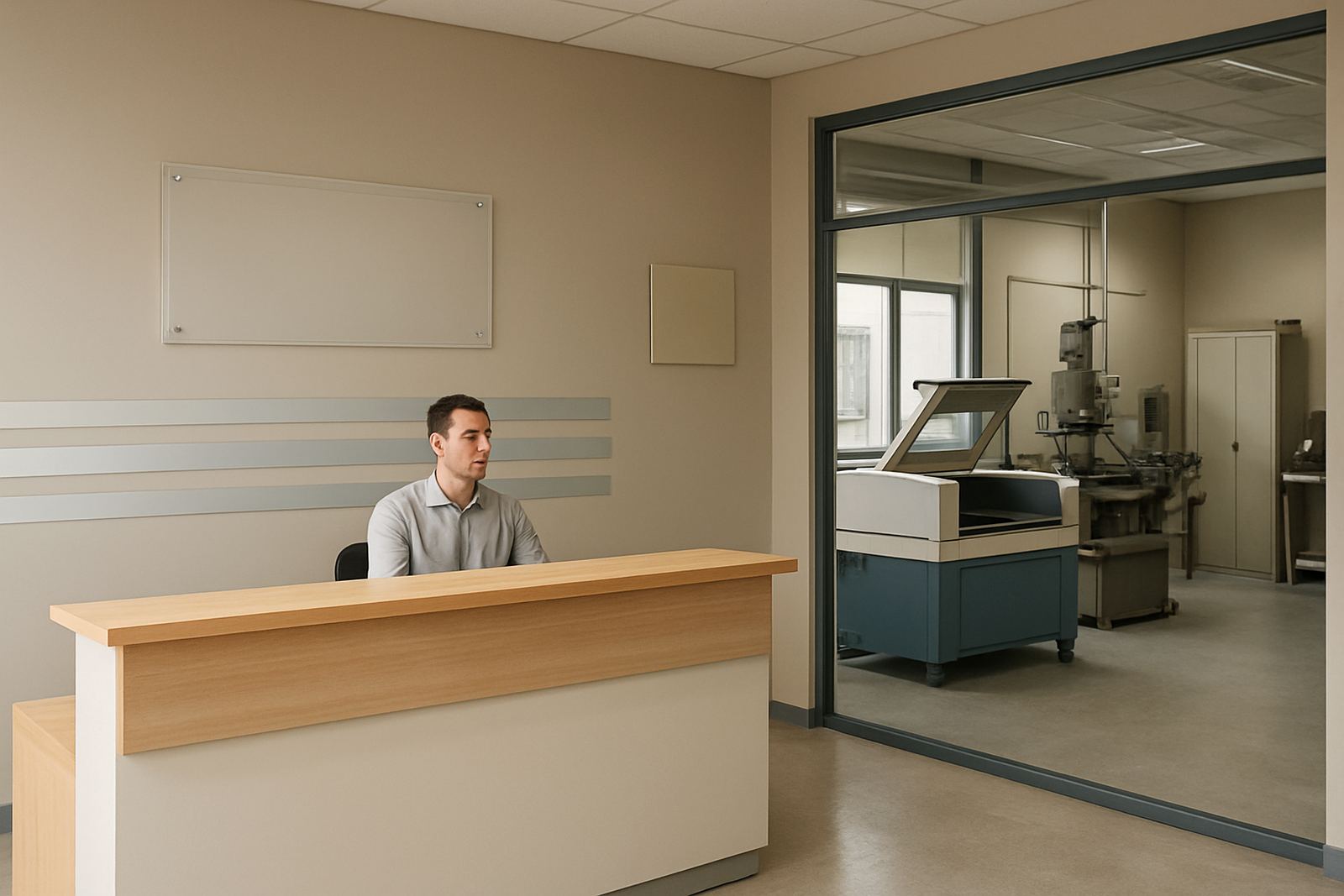
Reception Areas That Set the Tone
Reception is where clients decide, often within seconds, whether a business feels organised and easy to deal with. In offices, medical rooms, accountants practices and shared workspaces, the first items people notice are the reception sign, the counter front, the wall branding behind the seating area and the directional signs that tell them where to go next. A clean, readable setup reduces questions at the front end and keeps visitors moving without confusion.
For this use case, we usually look at one main feature piece plus supporting items. That can be a built up letter sign behind reception, flat cut lettering on a painted panel, a light box where visibility matters, and discreet room identification on doors and passage walls. If the space gets strong afternoon sun or glare from glass, matte finishes and proper spacing help the sign read better from across the room.
- Reception logo signs in acrylic, aluminium composite or painted panels
- Counter branding and welcome plaques
- Visitor route markers for waiting areas, lifts and meeting rooms
- Numbering and naming for suites, tenants and boardrooms
Privacy Film For Glass Offices And Meeting Rooms
Glass partitions are common in modern offices, but they can create privacy issues and too much visual clutter. Frosted or patterned privacy film is a practical fix for meeting rooms, open plan offices and reception screens. It gives people privacy without blocking light, which matters in Cape Town where many offices rely on daylight to keep the space bright and comfortable.
We cut and apply film to full panels, partial strips or custom logos on glass. The layout can be simple, such as a 1200 mm band at seated eye level, or more detailed with logo repeats and directional cut outs. In coastal areas like Table View and Blouberg, good surface prep matters because dust, salt air and damp mornings can affect adhesion if the glass is not cleaned properly before fitting.
- Frosted film for boardrooms and interview rooms
- Logo cut outs for reception glass and partition walls
- Safety strip marking for clear glass panels
- Patterned film for privacy with a neater finish than blinds
Door Plates, Room Names And Wayfinding
Door plates look small, but they carry a lot of the day to day load in an office. They tell staff, visitors and service providers where to go, and they cut down on interruptions at reception. We make door plates for toilets, boardrooms, private offices, storage rooms, server rooms and shared tenant spaces. They can be fixed with adhesive, screws or standoffs depending on the wall finish and how often the tenant changes.
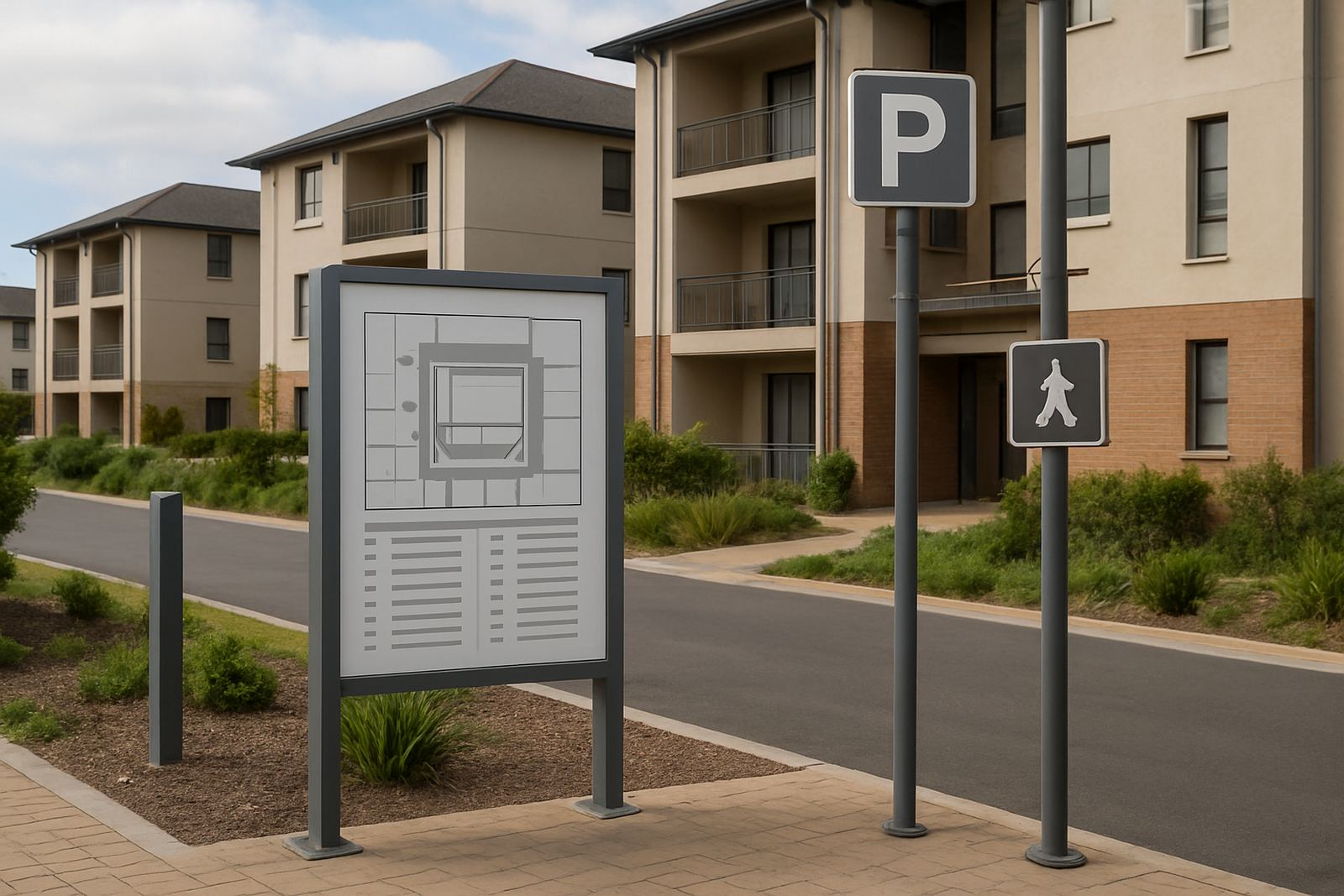
Wayfinding should be planned before production starts. A good layout includes the entrance sign, reception marker, directional arrows, floor identifiers and final room labels. If the office has a long passage or multiple wings, signs need to be placed at decision points, not only at the destination. That means measuring sight lines, door swings and walking routes properly. One common mistake is using text that is too small for the distance, or placing signs where they are hidden by plants, frames or open doors.
- Directional signs for entrances, lifts, stairs and corridors
- Room plates for boardrooms, offices and service areas
- Tenant directories for shared buildings
- Accessible signage where required for public facing spaces
What Offices Usually Need In One Package
Most office fit outs do not need every type of sign, but they do need the right mix. A typical package for a medium sized workplace might include a reception sign, glass privacy film, 10 to 20 room plates, a directory board and a few directional markers. For a business that receives suppliers, clients or candidates every week, it is worth adding toilet signs, fire route markers and clean label plates for storerooms and utility rooms.
The right material depends on the finish of the building. Aluminium composite suits corporate walls and gives a neat flat face. Acrylic works well for polished interiors and can be layered for depth. Vinyl graphics are cost effective for temporary tenancy changes or internal branding. Where there is strong sunlight, high traffic or cleaning with damp cloths and chemicals, we specify finishes that hold up better and stay readable. Load shedding also affects some offices, so unlit signs are often paired with high contrast graphics and reflective detail where needed.
Our workshop in Table View handles the cutting, routing and finishing, while installation is planned around office hours so staff are not disturbed more than necessary.
Planning The Layout Before Anything Gets Made
The best office signage starts with a simple site measure and a clear list of room names. Before production, it helps to confirm the visitor path from parking or the lift to reception, then from reception to the meeting rooms, toilets and exits. If there are multiple tenants, the directory and suite numbering should be agreed early so there are no last minute changes after the signs are already cut.
We also check wall surfaces, glass types and fixing points. Some offices have painted drywall, some have tiles, some have aluminium frames and some have textured concrete. That affects the fixing method and the final price. In shared buildings across Milnerton, Montague Gardens and Paarden Eiland, building rules may also limit what can be drilled, stuck or fixed outside the tenant boundary, so it is better to confirm this before manufacture.
- Measure all walls, doors and glass panels before ordering
- Confirm spelling, room names and tenant numbers in writing
- Choose materials that match the cleaning routine and sunlight levels
- Check body corporate or landlord rules for fixed signage
Typical Budgets For Office Signage
Budgets vary with size, material and installation access, but a practical guide helps during planning. A simple door plate can start from a few hundred Rand each, while a set of room plates and directional signs for a small office often sits in the low thousands. Reception feature signs generally cost more because of the larger format, custom finishing and installation time. Privacy film is usually priced by square metre, and full glass coverage can move the total up quickly.
For a small office in Table View or Parklands, a basic signage package may fall a quoted price. A mid sized workplace with reception branding, door plates and privacy film is quoted per job. Larger office floors, multi tenant directories or higher end feature work can go above a quoted price depending on materials and access. We try to match the spend to the actual use case so money goes into the signs people will see and use every day, not extras that add little value. Ask for a quote
If the space is being refurbished, it is usually cheaper to combine items into one production run than to order them in bits later. That also keeps the colour finish and fixing method consistent across the office.