What retail shops usually need from day one
Most retail clients come to us when they need a fresh shopfront, clearer branding or a better way to stand out in a line of units. In Table View, Blouberg, Parklands and Milnerton, that usually means a mix of exterior signs, window film and a few interior items that help customers find the till, fitting rooms or promotions without confusion. If the site faces strong coastal sun or salt air, we also plan for materials that keep their colour and finish for longer.
A typical set for a small to medium shop can include a fascia sign, cut lettering, vinyl window graphics, opening hours, directional signs and a light box if the store trades early or after dark. For larger centres, the brief often grows to include tenant boards, compliance signage and a standard style that can be repeated across branches. We look at sightlines from the road, parking areas and pedestrian flow before anything is made.
- Shopfront fascia signs for the main brand name
- Window frosting, printed graphics or full vinyl coverage
- Promotional panels for sales, specials and seasonal campaigns
- Interior wayfinding signs for tills, stockrooms and service points
- Safety signage for fire exits, no smoking areas and restricted zones
For centres and franchise-style stores, the layout matters almost as much as the graphics. A sign can look good on the drawing board but still fail if it is too high, too busy or blocked by awnings, trees or parked cars.
Shopfront signs that work in Cape Town conditions
Shopfronts in Cape Town have to deal with bright light, wind, dust and the occasional hard rain, so we choose the sign construction with that in mind. Some retailers only need flat panel signs with vinyl face application. Others need a light box with internal illumination for longer trading hours or for darker frontages. If there is metal framing, we check the fixing points and the wall condition before installation so the sign sits straight and stays put.
For retail strips in places like Paarden Eiland, Montague Gardens and Durbanville, the structure often has to cope with changing tenants and fast turnaround times. That is where modular signs, removable graphics and replaceable printed faces can save money over time. A well made sign should be easy to service without pulling apart the whole front.
- Aluminium composite panels for a neat, durable fascia
- Acrylic faces for light boxes and illuminated lettering
- Stainless or aluminium mounting brackets where needed
- Printed vinyl overlays for seasonal offers or new product ranges
- Anti graffiti or removable laminates for exposed areas
We also consider load-shedding. If your store relies on lighted branding after sunset, the sign should still read well in low light and not depend entirely on interior shop lighting. That is a small detail, but it changes how people see the store from the road.
Window graphics and interior branding that support the sale
Window space is valuable, especially for smaller independent retailers. The right graphics can shield stock from glare, add privacy near the fitting room or back office, and still keep the shop looking open. For many clients, frosting on the lower portion of the window combined with brand elements higher up gives the best balance. Printed vinyl is useful for campaigns, while cut vinyl gives a cleaner finish for logos, hours and service messages.
Inside the store, branding should guide the customer without shouting. We often make aisle signs, counter panels, wall logos, shelf strips and directional markers that match the shopfront. If the store has a promotions wall or seasonal display area, we can cut panels to size so they fit the shelving and displays properly, rather than leaving awkward gaps.
- Frosted window film for privacy and a cleaner street view
- Printed graphics for launches, promotions and product displays
- Cut lettering for logos, opening hours and contact details
- Directional panels for tills, collections and fitting rooms
- Wall signs and feature branding for the sales floor
Good interior branding should not compete with stock. It should guide the eye, support the price point and make the shop easier to shop in, especially when the floor is busy. That is where layout planning matters as much as print quality.
The planning questions we ask before manufacture starts
Before we make anything, we want a clear view of the site and the business needs. A clothing store, a hardware shop and a beauty retailer all use signage differently. We ask how far the sign must be seen, whether the shop trades after dark, what the landlord allows and whether the building has any fixings or access limits. On some sites, the centre rules are strict and the sign size, colours and illumination type have to be checked first.
It also helps to know whether the retailer is opening for the first time, relaunching, or replacing older signs in stages. A phased approach can keep costs manageable. For example, a business may start with a fascia, window graphics and safety signs, then add illuminated elements and interior wayfinding later. That can work well when the budget is tight and the store needs to keep trading.
We always recommend proper measurements on site. A sign that is 50 mm too wide or too narrow can cause delays and extra cost. It is a simple point, but it saves a lot of pain later.
Common mistakes that cost retailers time and money
The most common mistake is treating all signage as one job. The shopfront, windows and interior all serve different purposes, so each part needs its own material and size. Another issue is choosing a sign that is too small for the frontage. In a busy retail strip, that can make a shop look hidden even when the product offering is strong.
Some stores also overcrowd the windows. Too many sale messages, too many fonts and too many colours can make the frontage hard to read. It becomes noise instead of useful branding. A cleaner layout usually works better and is easier to update later. We often suggest keeping permanent branding separate from short term promotions so the shop does not feel cluttered every few weeks.
- Not checking landlord or centre approval before production
- Using indoor-grade graphics outside
- Ignoring sun fade, wind and moisture near the coast
- Trying to fit too much text onto one window
- Skipping maintenance, so the sign looks tired after a year
Another mistake is forgetting access. If a sign is installed high up, it should still be possible to clean or service it without building work every time. That is worth planning for from the start.
Budget ranges for retail signage in Rand
Retail budgets vary a lot, but it helps to work from realistic ranges. A simple start-up package for a small shopfront can be quoted per job, depending on size, materials and how much artwork is needed. That may cover a fascia sign, basic window graphics and a few interior panels. Ask for a quote
For a more complete fit-out with light boxes, larger window coverage, directional signage and stronger exterior branding, many clients are quoted per job. Larger retail units, multi-front sites or centre-facing stores can go beyond that, especially if there is illumination, custom metalwork or multiple signs across one property. Ask for a quote
Maintenance should also be budgeted for. Cleaning, graphic replacement and repairs after weather damage are much cheaper than replacing a whole sign later. As a practical rule, it is better to spend a little more on the right material than to redo the job within 12 months.
How our workshop supports retail rollouts
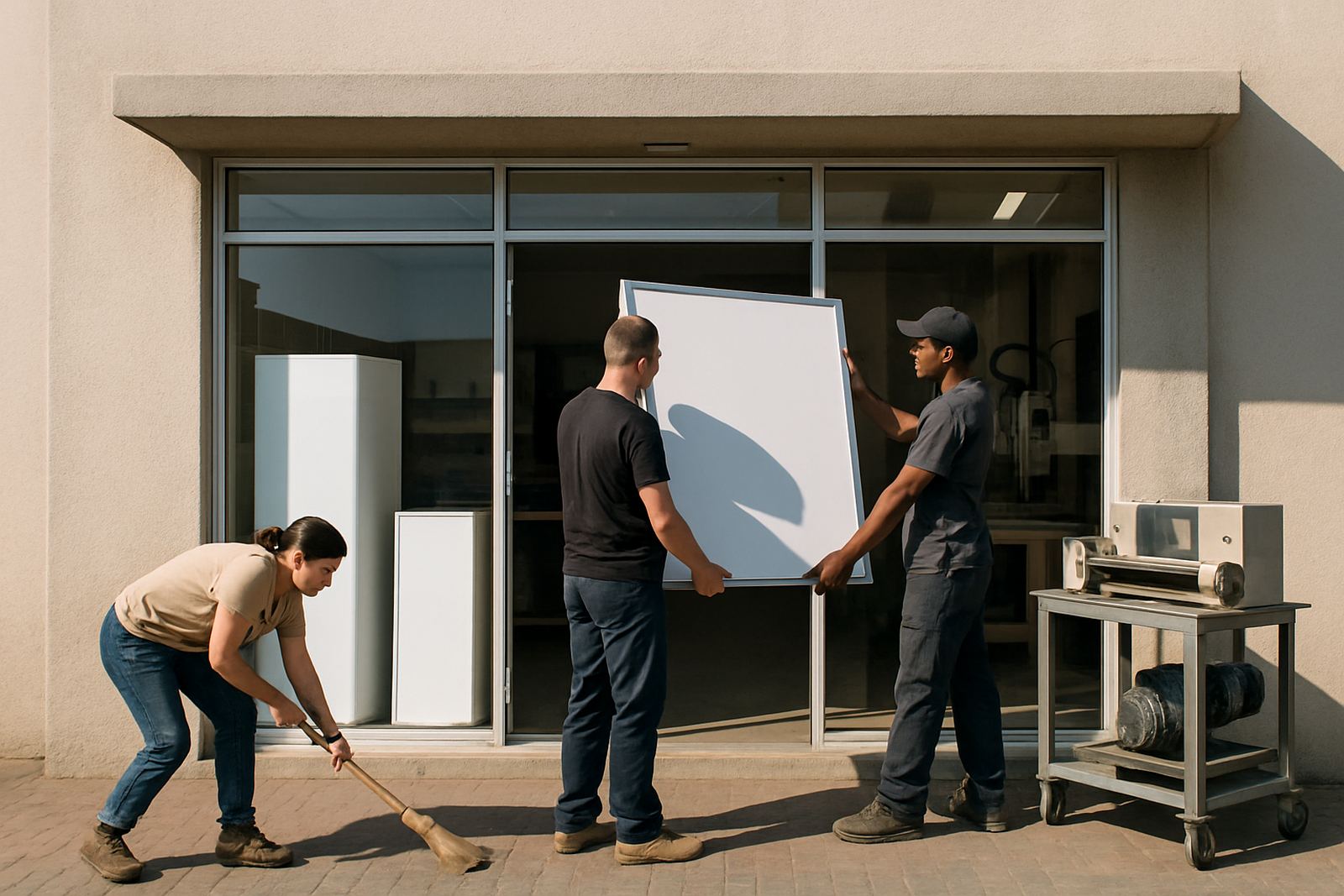
Because we have both signage manufacture and an engineering workshop, we can handle more than a printed panel. We make and fit light boxes, machine plastic parts, cut panels to size and do the cleaner finishing work that retail sites often need. That includes sandblasting, CNC routing and engraving where a store needs a smarter finish on entry signs, backlit elements or branded panels.
For retailers across Table View, Blouberg, Parklands, Milnerton, Durbanville, Montague Gardens and Cape Town, that means one team can manage the job from measurement to installation. Johan Petrus van der Merwe oversees the business, with Amogelang Sebola coordinating operations, Willem Smit supervising the workshop, Leanne Jacobs handling signage coordination, Musa Dlamini on CNC machining and Zelda Kruger supporting client service. It keeps the job organised, which matters when store opening dates are fixed and the centre wants the frontage completed on time.
If your shop needs a fresh frontage, better windows or a cleaner interior brand presence, the safest route is to plan the whole site properly first. Then the signs do the job they are meant to do, day after day, without fuss.