What a machined nylon bush does in everyday plant and workshop use
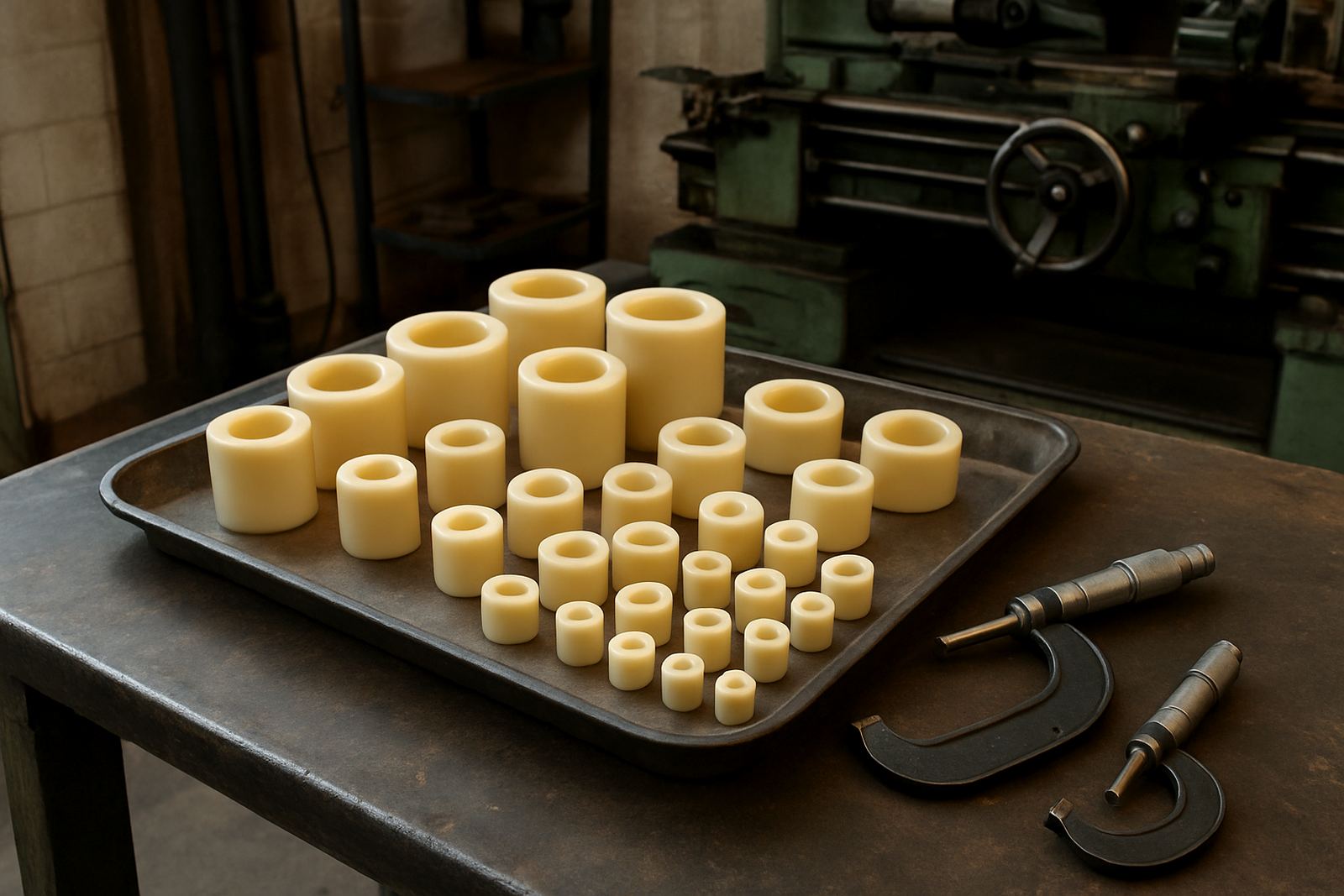
A nylon bush is a simple spacer or bearing style part that sits between moving or fixed components to reduce wear, take up clearance, guide rotation or support a shaft. In many maintenance jobs, a standard off the shelf part is close, but not close enough. That is where a custom machined bush helps. It can be turned, bored, faced or milled to suit the exact shaft diameter, housing size and working load.
Nylon is popular because it is light, tough and naturally low in friction. It handles repeated movement well, and it also offers good resistance to many oils, greases and general workshop grime. For local businesses working in Table View, Milnerton, Blouberg, Parklands, Durbanville and Cape Town, it is a useful material for equipment that must keep running without waiting long for imported parts.
We supply nylon machined bushes for repairs, upgrades, new builds and replacement runs. If your machine has a worn sleeve, a noisy pivot point or a part that keeps binding, a correctly sized bush can solve the issue without having to replace the full assembly.
Sizes, wall thickness and finish options we machine
Every bush starts with the measurements of the shaft, bore and overall length. Depending on the application, we machine internal and external diameters to suit a light slip fit, a press fit or a more controlled running fit. Wall thickness matters because a thin wall can flex too much, while a heavy wall can take up too much space in a housing. We match the dimensions to the job, not just to the drawing.
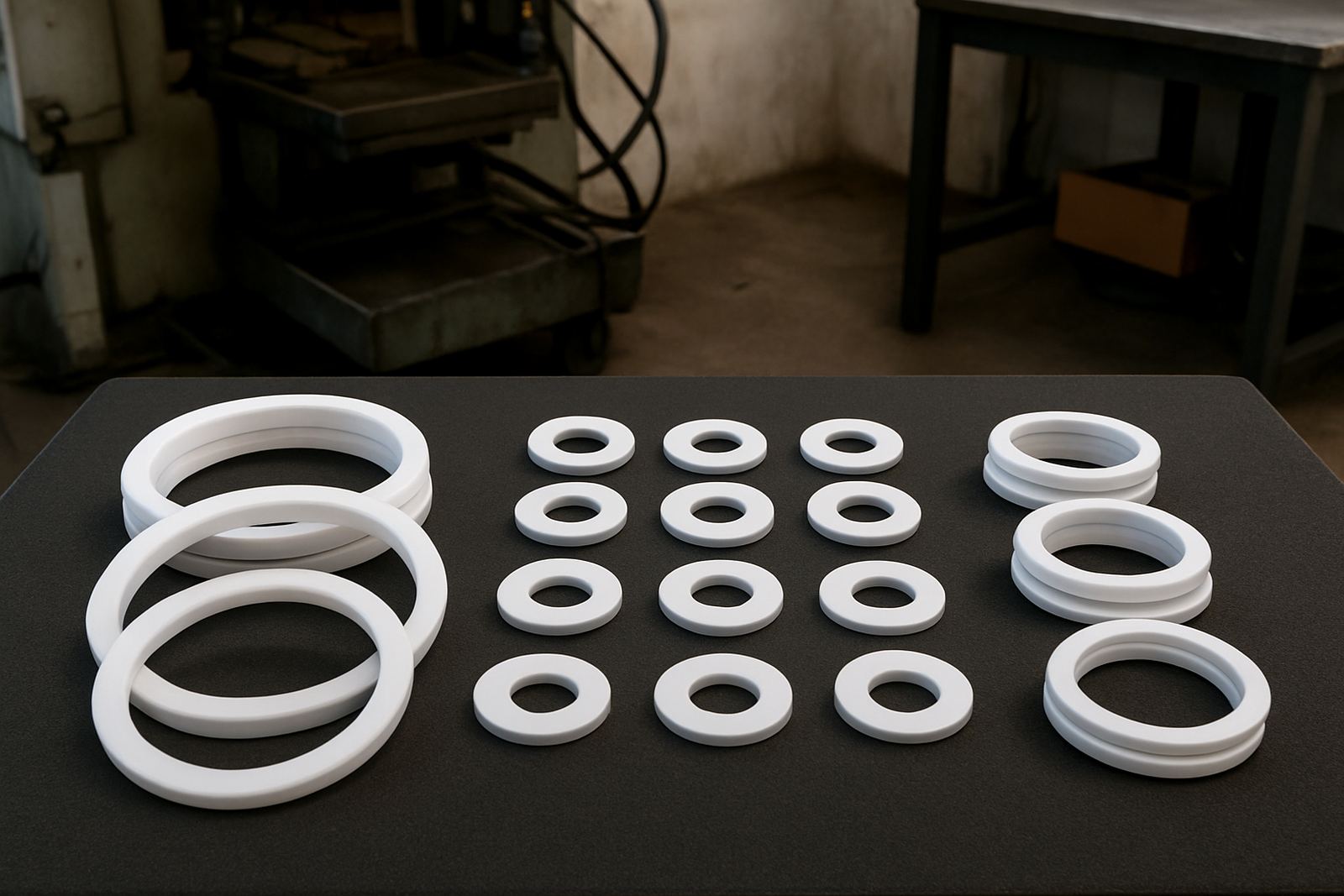
Common options include plain cylindrical bushes, flanged bushes, stepped bushes and bushes with chamfers for easier insertion. We can also machine grooves, shoulders, reliefs and cut outs where the part needs to clear another component. Surface finish can be left smooth for easy fitting or dressed to improve movement in service.
- Internal diameter from small control sizes to larger plant fitments
- Outside diameter matched to housings, sleeves and bearing seats
- Lengths cut to exact millimetres for tight assemblies
- Flanges, steps and recesses for location and retention
- Single pieces, short runs and repeat orders for maintenance stock
Where nylon bushes suit best across plant and equipment
Machined nylon bushes suit a wide range of equipment where metal on metal contact is not ideal. They are often used in pivots, hinges, rollers, guides, conveyor components, mounting points, actuator sleeves and maintenance assemblies. They are also useful where a softer contact surface is needed to protect a shaft or housing from scuffing.
In coastal areas like Table View and Blouberg, nylon is often chosen for parts that see humidity, salt in the air and regular cleaning. It is not a cure for every wear problem, but it is a dependable option for many jobs where corrosion is a concern and the component must keep moving. For indoor workshops, packing areas and light industrial equipment, it can offer years of service when the fit is correct and the load is within range.
If you are replacing an old metal bush, we can work from the worn sample, a sketch or measured sizes. Where a machine has already been modified over time, we can machine to the existing setup so the new part sits properly without extra rework.
Installation needs, power use and site requirements
Most nylon bush fitting jobs need basic mechanical installation only. In many cases the part is pressed in, tapped into position or installed during a strip down and rebuild. Some assemblies need adhesive, retaining compounds or a light interference fit, while others are made to slide in and be retained by a circlip, shoulder or fastener.
There is no gas requirement for the bush itself. On site, the work usually needs hand tools, a press, measuring equipment and sometimes a small heater or controlled warming to ease fitment. If the full assembly is being installed at a premises in Montague Gardens, Paarden Eiland or Durbanville, we can make sure the part is prepared for the fit method you plan to use.
- Press fit, slip fit or locating shoulder, depending on the machine
- No gas supply needed for normal installation
- Useful where power interruptions affect replacement timing, since parts can be prepared in advance
- Installation can be done during planned maintenance shut downs or after hours
Care, wear checks and servicing intervals
Nylon bushes are easy to maintain, but they still need checks. During routine servicing, look for oval wear, scoring, heat marks, side play and any sign that the shaft is running off centre. If the bush starts squealing, binding or producing dust and shavings, it may be near the end of its working life. Early replacement can prevent damage to the shaft or housing.
Cleaning should be done with a suitable solvent or wipe down that will not attack the nylon. Avoid harsh chemicals unless the material grade has been checked for that exposure. Grease points should be kept clear, and any surrounding hardware should be checked for looseness because a loose bracket can make a good bush fail quickly.
For businesses that keep spare parts on hand, we can make a repeat batch once the correct dimensions have been confirmed. That helps cut downtime when a machine is used daily and cannot wait for a new imported component.
What to check before you order nylon machined bushes
The best results come from good measurements. If you are ordering a custom bush, check the shaft diameter, housing bore, required length and any shoulder or flange detail. It also helps to know the working speed, load direction, temperature and whether the part will see water, oils or cleaning chemicals. A bush for a slow pivot point is not the same as one for a moving conveyor guide.
We also need to know if the part should be a tight fit, a hand fit or a replaceable wear item. If the original bush is damaged, send the old sample if possible. A worn sample can still show the shape, but we will check for wear on the internal face before copying it. If the machine has been repaired before, tell us what has changed so we do not duplicate an old mistake.
- Shaft diameter and housing bore in millimetres
- Overall bush length and any flange size
- Load type, rotation speed and movement pattern
- Heat, moisture, oil or chemical exposure
- Quantity needed for one-off repair or maintenance stock
Key facts
| Material | Nylon, machined to size |
|---|---|
| Manufacturing methods | Turning, boring, facing and milling |
| Typical fit types | Slip fit, press fit and locating fit |
| Size range | Made to sample, drawing or measured dimensions |
| Use areas | Plant, equipment, maintenance and light industrial assemblies |
| Supply format | Single parts or repeat production runs |