What Polycarbonate Guards Do on Site
Polycarbonate guards are used where you need visibility and protection in the same panel. They help shield operators from splatter, chips, dust, light impact and accidental contact, while still letting you monitor the machine or process behind the cover. In workshops and production areas across Table View, Milnerton and Cape Town, they are a practical choice for enclosures, viewing panels, machine covers and safety screens.
Unlike brittle materials that crack under impact, polycarbonate handles repeated knocks better and is often used around machinery where clear sightlines matter. It is also a sensible option where cleaning is regular, because the surface can be maintained without special handling. For many businesses, the main benefit is simple: you can keep the area visible, protected and easier to manage during day to day work.
Common Sizes, Thicknesses and Finish Options
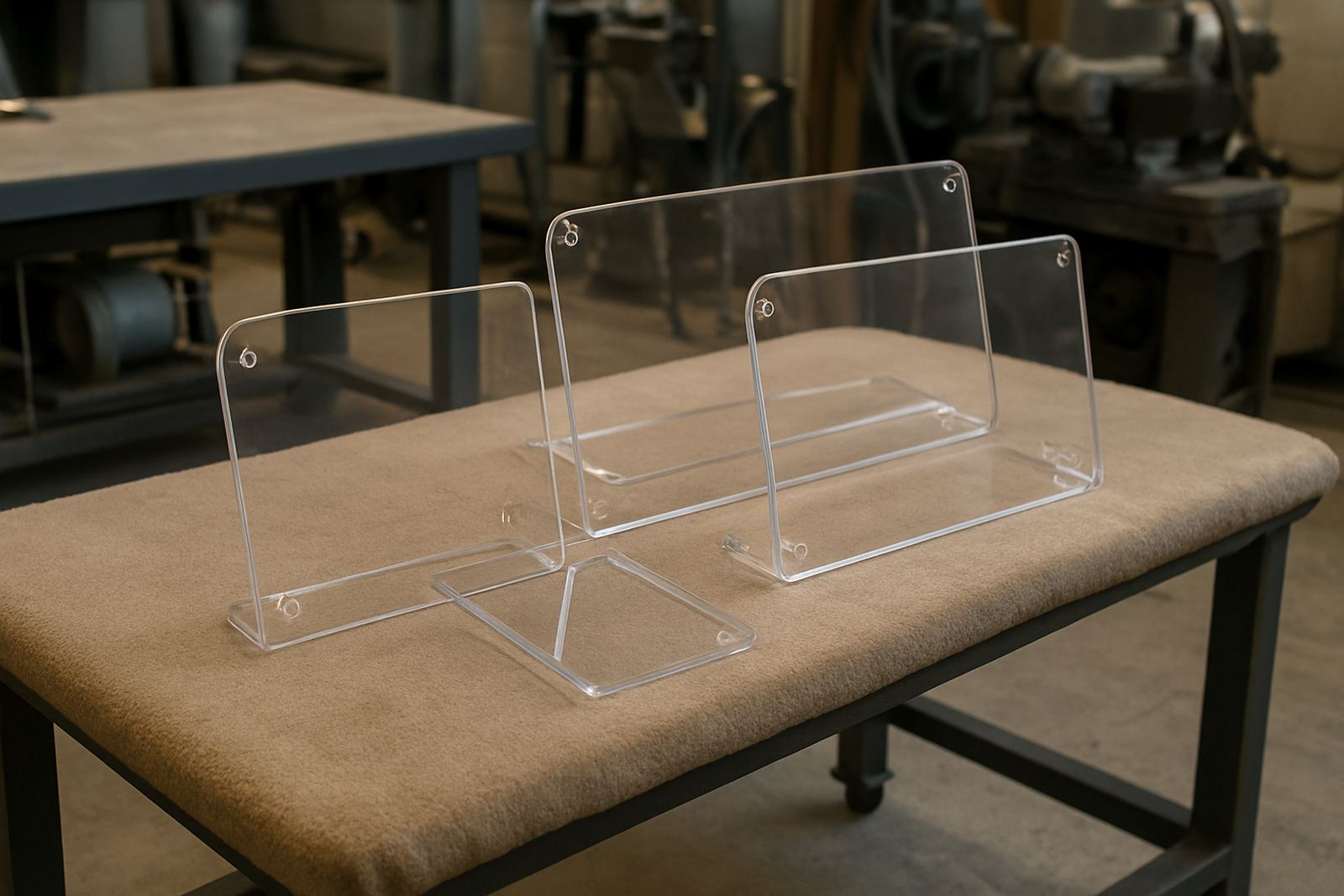
We make guards to suit the machine, not the other way round. Standard sheet sizes are often cut down to size, and the final piece is then drilled, routed or shaped to fit brackets, frames and access points. We work with clear sheets, tinted options where glare needs to be reduced, and thicker sections where the guard must take more punishment.
- Thickness options commonly used: 3 mm, 5 mm, 6 mm and 10 mm
- Sheet sizes cut to order for small covers or full machine faces
- Rounded corners, drilled holes, slots and stepped cut-outs available
- Clear, tinted or frosted finish depending on visibility and privacy needs
- Hinged panels or lift-off sections for maintenance access
If the guard needs to fit around pipes, cable runs or moving arms, we measure for those clearances before cutting. That helps avoid rubbing, stress points and awkward gaps that can become a problem later.
Where Polycarbonate Guards Suit Best
These guards are used in light industrial, commercial and engineering settings where protection and visibility must work together. They suit packaging lines, saw enclosures, small CNC areas, wash bays, laboratory workspaces, food prep areas, printing equipment and general workshop guarding. In coastal areas like Blouberg and Parklands, they are also useful where humidity and salt in the air can be an issue for exposed fittings.
They are especially helpful where a clear barrier is needed for staff safety, cleaner working conditions or better control over dust and debris. If your site has regular load-shedding or backup power cycles, a properly fitted guard also helps protect delicate moving parts and keeps access simple when operators need to restart equipment.
- Machine viewing panels
- Splash and chip guards
- Safety covers for workshop equipment
- Barrier screens in plant rooms and prep areas
- Custom access panels for maintenance points
Installation, Fixings and Site Requirements
Installation depends on how the guard is being used. Some covers are fixed permanently, while others need hinges, clamps or quick-release fittings for cleaning and servicing. We can supply pre-drilled panels, routed edges and mounting holes so the fitting is quicker and neater on site. If a frame is needed, we can machine the parts and prepare them for assembly.
For power or gas related equipment, the important point is clearance. A guard should not trap heat, interfere with ventilation or block emergency access. We check where cables, burners, fans, switches and service panels sit before finalising the design. On sites with gas-fired equipment or warm-running machinery, ventilation slots or stand-off fittings may be needed so the guard does not sit too close.
Where possible, we ask for dimensions, photos and a sample view of the mounting area. That lets us plan around uneven walls, fixed pipework and floor space that may be tight in older buildings or busy workshops.
Care, Cleaning and Ongoing Servicing
Polycarbonate is easy to maintain if it is cleaned correctly. Use a soft cloth, mild soap and clean water. Avoid abrasive pads, strong solvents and rough scrubbing, because these can mark the surface over time. For guards in dusty or high-touch areas, regular wiping helps maintain visibility and keeps the panel looking tidy.
Over time, fixings can loosen and hinges can start to rattle, especially where machinery vibrates or the guard is opened often. We offer maintenance on existing signage and workshop items, and the same applies to guards that need re-drilling, replacing or adjusting. If a panel has started to haze, crack at a corner or pull away from its mount, it is best checked before the damage spreads.
- Clean with mild detergent and a soft cloth only
- Check fixings, hinges and stand-offs during routine servicing
- Inspect for scratching, stress marks or heat warping
- Replace damaged panels before they affect visibility or safety
What to Check Before You Order
Getting the right guard starts with a clear brief. Measure the opening carefully and note where any moving parts travel, where cleaning access is needed and whether there are heat sources, water spray or dust build-up nearby. If the guard is for a machine that already has a frame, send the opening size and the fixing points, not just the outer size of the machine.
Please check the following before ordering:
- Overall width, height and depth needed
- Thickness required for the level of impact expected
- Whether the panel must be clear, tinted or frosted
- Fixing type, such as drilled holes, hinges or clamps
- Any ventilation or service access needed
- Location of cables, pipes, switches and moving parts
If you are supplying a replacement guard, bring the old one along or send clear photos with measurements. That helps us match hole positions, edge shapes and any offsets needed for a proper fit. For businesses in Table View, Milnerton, Durbanville, Montague Gardens and Cape Town, we can work from site details and prepare the guard for installation with less disruption to your operation.
Key facts
| Material | Clear engineering-grade polycarbonate |
|---|---|
| Thickness range | 3 mm to 10 mm, cut to requirement |
| Typical uses | Machine guards, safety screens, covers and viewing panels |
| Fabrication | Cut to size, drilled, routed, engraved and shaped in workshop |
| Mounting options | Fixed, hinged, lift-off, clamped or stand-off fitted |
| Service area | Table View, Milnerton, Blouberg, Parklands, Durbanville and Cape Town |