What UHMW Guides Do on a Working Line
UHMW, or ultra high molecular weight polyethylene, is used where product needs to slide, travel or be kept in line without scraping against metal. In practice that means guide rails, wear strips, side guides, transfer guides, chute liners and support blocks that take constant contact from bottles, cartons, crates, trays or other moving items. The material is naturally slippery, tough and quiet, which helps reduce drag and noise on a busy line.
For local factories and packhouses, that matters because downtime is expensive and replacement parts need to fit properly the first time. UHMW guides are a practical choice for food handling, packaging, light engineering and material movement where corrosion, moisture and repeated impact are part of the job. They also cope well with coastal humidity in Table View and Milnerton, where some other plastics can swell or stick.
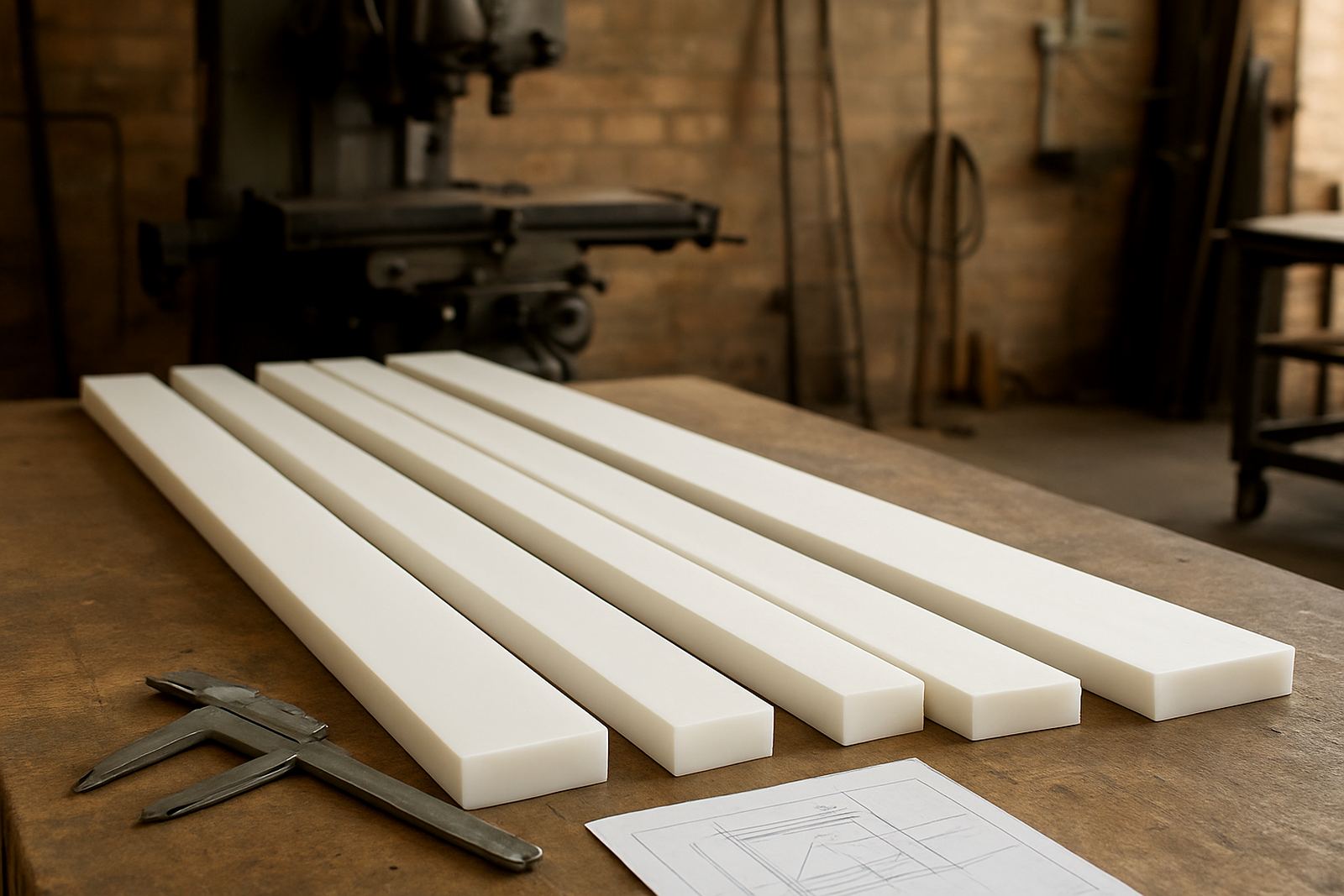
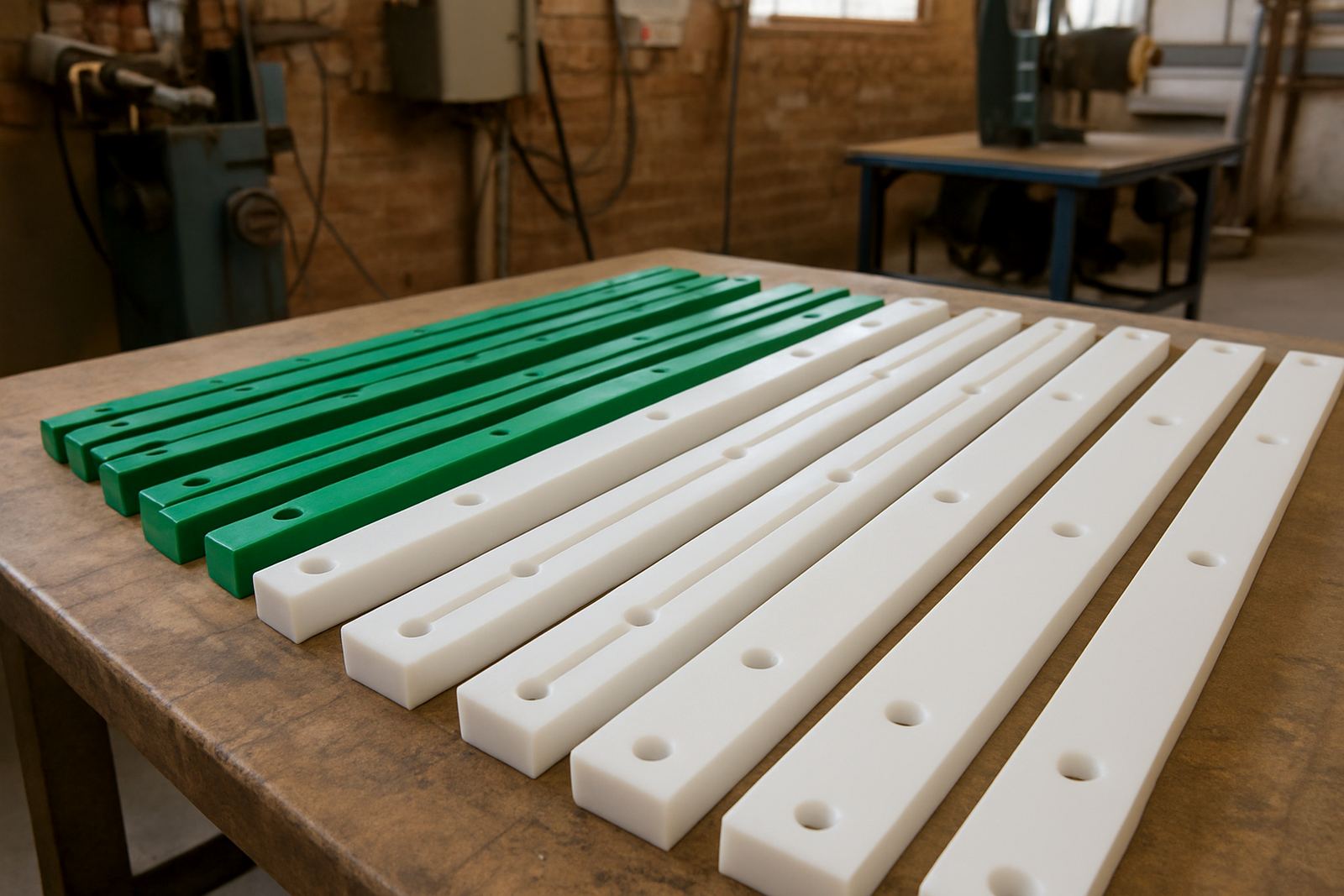
We machine UHMW into straight guides, curved sections, angled wear strips and drilled pieces to suit existing frames. If you have worn rails, broken liners or a bottleneck at a transfer point, we can work from a sample, a drawing, or dimensions taken on site.
Sizes, Thicknesses and Machining Options
UHMW guides are usually made to size rather than pulled from a shelf in one standard profile. That gives better fit and better service life. Common sheet thicknesses range from 6 mm to 50 mm, with thicker sections available for heavy wear or wide support faces. Standard cut widths and lengths depend on the job, but we regularly machine parts up to full sheet size and smaller cut to size components for repair work.
We can supply guides with square edges, radiused corners, countersunk holes, slots, steps, chamfers and curved profiles. If your application needs a low-friction face and a stronger fixing section, we can machine a stepped part or combine guide surfaces with bolt holes and rebates. Colour is usually natural white, black or green depending on stock and the service environment.
- Sheet thicknesses commonly from 6 mm to 50 mm
- Cut to size lengths for short runs or replacement pieces
- Drilled, slotted and countersunk fixing points
- Curved, angled and stepped guide profiles
- Natural, black or coloured material options depending on availability
If the line is already installed and space is tight, we can machine a part to the exact envelope needed so it clears frames, rollers and guards without forcing a redesign.
Where UHMW Guides Suit Best
These guides suit places where product movement must stay controlled and the contact surface needs to wear slowly. Typical uses include carton rails on packaging lines, side guides for conveyors, chute liners for dry product, transfer guides between machines, bottle and container support strips, and wear pads on handling systems. They are also used in light fabrication and general engineering where a hard, smooth contact point is needed.
UHMW is not the answer for every job, but it is a strong option when you want low friction, chemical resistance to many common washdown agents and a material that does not rust. In coastal parts of Cape Town, that can be a real advantage where moisture and salt air attack metal fixings and exposed surfaces. It is also suitable for indoor industrial areas where load-shedding means equipment may restart often and parts need to handle repeated starts without chipping easily.
- Packaging and palletising lines
- Food and beverage handling equipment
- Chutes, liners and transfer points
- Warehouse handling and conveyor systems
- Small engineering assemblies and wear faces
When the process is dusty, damp or running fast, the guide face must stay stable and not grab the product. UHMW does that well, provided the installation is set up properly.
Installation, Fixings and Power Needs
UHMW guides are normally bolted, screwed or clamped into place on existing frames, brackets or support structures. They do not need power or gas as a material, though the machine they are fitted to may be part of an electrical line. We can machine guide parts for manual fitment, maintenance swaps or planned shutdown work. If the site has limited access, we can also prepare sections in manageable lengths so the install can be done by maintenance staff without heavy lifting gear.
Because UHMW expands and contracts more than metal, fixing method matters. Holes need enough clearance and the guide should not be over-tightened. In hot plant rooms or outdoor areas, a small allowance for movement helps prevent buckling. Where a line is washed down, we can include drainage slots or stand-off points so water does not sit behind the part.
For sites in Paarden Eiland, Montague Gardens and Durbanville, we can assist with replacement parts for scheduled shutdowns or after hours work where access is easier. If you have an older line, bring the broken guide in or send clear dimensions and we will machine a matching part. A neat fit saves time later, it also reduces vibration and edge wear.
Care, Wear Checks and Servicing Intervals
UHMW guides are low maintenance, but they should still be checked as part of routine plant care. Look for grooves, thinning at the contact face, loose fixings, cracking around holes and any build-up of dirt or product residue. If the line is running rougher than usual or product starts drifting, the guide may have worn enough to change the track. Catching that early avoids damage to the conveyor or chute itself.
Cleaning is usually simple. Use a mild detergent, water and a soft cloth or brush. Avoid harsh solvents unless you have confirmed they are safe for the application. In food handling areas, standard washdown procedures should be followed and all fixing points should be checked after cleaning, because repeated vibration and moisture can loosen hardware over time.
- Inspect contact faces for grooves or flat spots
- Check hole wear and bolt tightness
- Clear product build-up before it hardens
- Replace before the guide starts cutting into the frame
We can also make replacement parts from your worn sample, which is often the quickest way to keep a line moving without guesswork.
What to Send When Ordering UHMW Guides
To price and machine UHMW guides correctly, the main thing is clear information. A simple sketch, a marked-up photo or the old part is often enough. If the part is part of a larger assembly, send the overall dimensions, fixing centre distances and the thickness of the support it sits on. If there is a curve, include the radius or a template. If there are cut-outs, note their size and position from one fixed edge.
Please also tell us what the guide is touching, how fast the line runs and whether it is indoors, outdoors or in a washdown area. That helps us choose the right thickness and fixing method. If the part sees impact rather than just sliding contact, we may suggest a thicker section or a wider bearing face. Small details matter, especially on a line that cannot stop every time a guide wears out.
Useful details to include:
- Overall length, width and thickness
- Hole sizes, fixing centres and slot positions
- Whether the part is straight, curved or stepped
- The product being guided and the line speed
- Operating temperature, moisture and washdown conditions
If you are not sure of the exact spec, we can work from the part that came off the machine and help you compare options before we cut anything.
Key facts
| Material | UHMW polyethylene, low friction engineering plastic |
|---|---|
| Common thickness | 6 mm to 50 mm, with thicker sections available on request |
| Finish | Smooth machined surface with square, chamfered or radiused edges |
| Fixing options | Drilled holes, countersinks, slots, rebates and clamp fit profiles |
| Typical applications | Packaging lines, chutes, conveyors, wear strips and guide rails |
| Service area | Table View, Blouberg, Milnerton, Parklands, Durbanville, Montague Gardens, Paarden Eiland and Cape Town |