Why engraved plates lose clarity over time
Most engraved plates start to look tired for simple reasons, not because the engraving has failed. Dust builds up in the cuts, fingerprints leave a film on polished surfaces, and coastal moisture can leave a dull layer if the plate is never wiped down properly. In places like Table View and Blouberg, the air can carry fine salt that settles on metal, acrylic and plastic plates very quickly.
If the plate is fitted near a road, in a workshop, or at an entrance where people touch it often, grime collects faster than many business owners expect. That is why gentle cleaning matters. A plate that is cleaned the wrong way can lose contrast, pick up scratches, or have paint removed from the engraved recesses, and once that happens the text becomes harder to read from a distance.
What to use when cleaning engraved plates
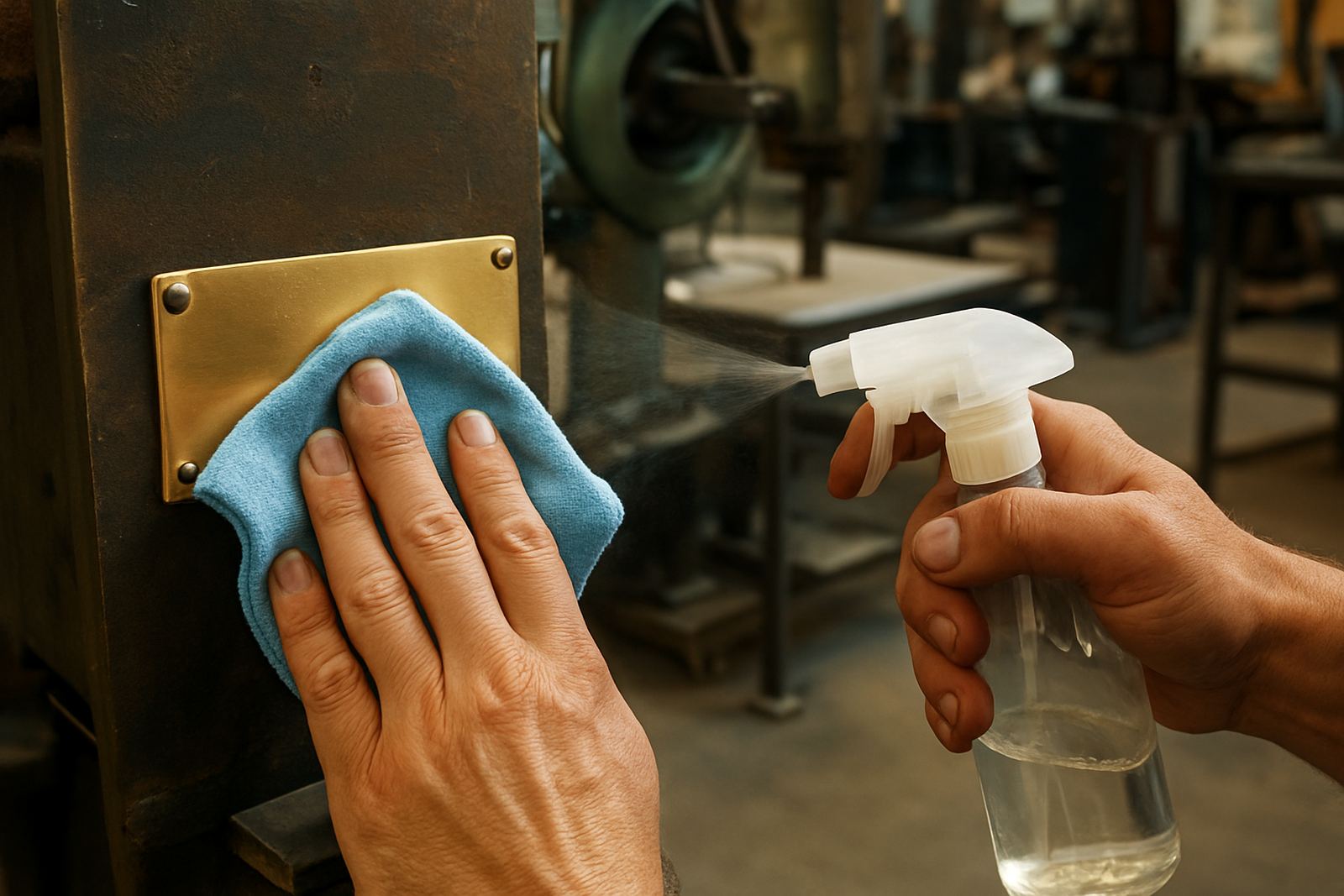
The safest approach is usually the simplest one. Warm water, a mild dish soap and a soft microfibre cloth are enough for most engraved plates. If the plate has been fitted on a machine, gate, wall panel or control box, start with a dry dusting first so you do not drag grit across the surface. That small step helps a lot, especially on brushed aluminium and engraved plastic plates.
For stubborn marks, use a soft nylon brush or a damp cotton bud to lift dirt from the engraving grooves. Do not press hard, because the aim is to remove dirt without wearing the edges of the engraving. If the plate is laminated, painted or clear coated, keep the cleaner mild and test a small corner first.
- Soft microfibre cloths for wiping
- Warm water with a little mild soap
- Soft nylon brush for engraved lines
- Cotton buds for tight corners
- Clean dry cloth for final drying
What to avoid if you want the lettering to stay sharp
Some cleaning products do more harm than good. Strong solvents, abrasive powders, scouring pads and rough wire brushes can scratch the face of the plate or strip paint out of the engraving. That is especially true on smaller plates where the text and numbering are fine. Once the surface is scratched, light catches it unevenly and the plate starts to look faded even when the engraving is still intact.
Avoid high pressure water directly on engraved plates too. It can force dirt deeper into the cut lines, loosen adhesive backed plates, or lift edge seals on fitted name plates. If a plate is mounted outdoors in Milnerton or Paarden Eiland, gentle hand cleaning is normally better than any quick blast with a hose. The same applies to cleaning near electrical panels where water control matters.
- No scouring pads or abrasive powders
- No strong thinners or harsh degreasers
- No direct high pressure spray at close range
- No metal scrapers or blades
- No dry rubbing on gritty surfaces
A practical cleaning routine for shops, workshops and offices
A good routine keeps engraved plates readable without turning cleaning into a big task. For most businesses, a weekly wipe is enough indoors, while outdoor plates may need attention every two to four weeks depending on dust and sea air. If the plate sits near a fabrication area, loading bay or entrance with heavy foot traffic, check it more often.
Start by dusting the plate, then wipe with the damp cloth and mild soap. Wipe in one direction where possible, then dry the surface fully so water spots do not sit in the engraving. If the plate has black paint in the engraved letters, drying matters even more because standing water can leave pale marks on the surface around the text.
- Weekly for indoor plates in offices or reception areas
- Every 2 to 4 weeks for outdoor plates in coastal air
- After heavy dust, sand or paint work nearby
- Immediately if chemical splash or oily residue lands on the plate
Different plate materials need different care
Engraved plates are not all the same. Plastic plates are usually forgiving, but they can scratch if wiped with grit still on the cloth. Metal plates often handle weather well, but polished finishes show fingerprints and streaks more easily. If the plate has infill colour inside the engraving, gentle cleaning helps preserve the contrast for much longer.
For aluminium plates, avoid soaking the back edge if the plate is fixed to a painted surface or adhesive pad. For plastic plates, keep away from very hot water and solvents that may dull the face. Sandblasted or etched items need the same careful treatment because the textured surface can trap dirt. If you are not sure what material you are working with, treat it as a delicate surface and go slowly.
In a Table View factory, for example, a numbered equipment plate at the main gate can gather salty dust and fingerprints within days. A light weekly wipe with a soft cloth keeps the numbering clear and saves the supervisor from replacing a plate that only looked neglected. It is a small habit but it makes a real difference.
When cleaning is not enough and the plate should be replaced
Sometimes an engraved plate has reached the point where cleaning will only improve it for a short while. If the engraving is worn down, the paint fill has faded, the corners are lifting, or the plate has been badly scratched, replacement may be the more practical option. That is often the case on plates exposed to sunlight, coastal air and repeated contact from hands, cleaning cloths or moving parts.
Before replacing it, check whether the issue is dirt, corrosion or physical damage. Dirt and grime can be cleaned off. Corrosion, deep scratches and peeled coatings usually cannot. A fresh plate with the correct material, engraving depth and fixing method will hold up better and keep the text readable from a safe distance.
- Text is hard to read even after cleaning
- The surface has deep scratches or pitting
- Paint or infill has worn away from the engraving
- Edges are lifting or the plate no longer sits flat
- The plate has been damaged by chemicals, heat or impact
Keeping engraved plates readable in Cape Town conditions
In Cape Town, conditions change from site to site. A plate in Durbanville may mainly deal with dust and sun, while one in Blouberg or Milnerton has to cope with salt in the air as well. That is why cleaning habits should match the location. A plate near a workshop roller door, for example, will need more frequent attention than one inside a calm reception area.
If you manage signage or equipment plates across several branches, keep one simple standard for cleaning and inspection. Ask staff to wipe plates with the correct cloth, report any fading early and avoid using whatever cleaner is on hand. That sort of discipline keeps safety notices, asset plates and engraved labels legible for longer, and helps your site stay orderly without much extra effort.