Start With the Site Line, Not the Artwork
The best pylon sign starts with where drivers actually see it. On busy routes in Blouberg, Parklands and along the industrial edges of Milnerton, the sign needs to read quickly at road speed, not just look good from the gate. That means checking the approach angle, stopping distance, traffic flow and any trees, walls or parked vehicles that may block the view.
It also helps to think about the sign in relation to the building. A pylon sign should guide people to the entrance or driveway, not sit in a spot where it looks stranded. If the property has more than one access point, or if delivery trucks use a separate gate, the layout must make sense for both visitors and suppliers.
Check Municipal Controls Before the Foundation Is Cast
Many pylon sign headaches start when the structure is already standing and someone asks about approvals. Before fabrication, confirm what the local authority allows for size, height, setback from the road reserve, and whether the site needs a specific submission for signage. If the property is near a main road or busy junction, extra scrutiny is common.
- Confirm the allowed sign height for the erf and zoning.
- Check whether the sign may face more than one road.
- Confirm setback from sidewalks, servitudes and drainage lines.
- Make sure the footing does not interfere with underground services.
- Ask whether illumination needs separate approval.
In Cape Town, a neat drawing on paper is not enough. The foundation position, electrical route and final sign size all need to match the site conditions, otherwise you end up paying twice.
Build for Coastal Wind and Corrosion
Table View and Blouberg are not kind to tall signs. Wind load, salt in the air and sandblasting from the coast can shorten the life of a weak frame fast. A pylon sign must be designed for the actual site conditions, not just for a calm workshop floor. If the structure is too light, it will flex, crack or work loose over time.
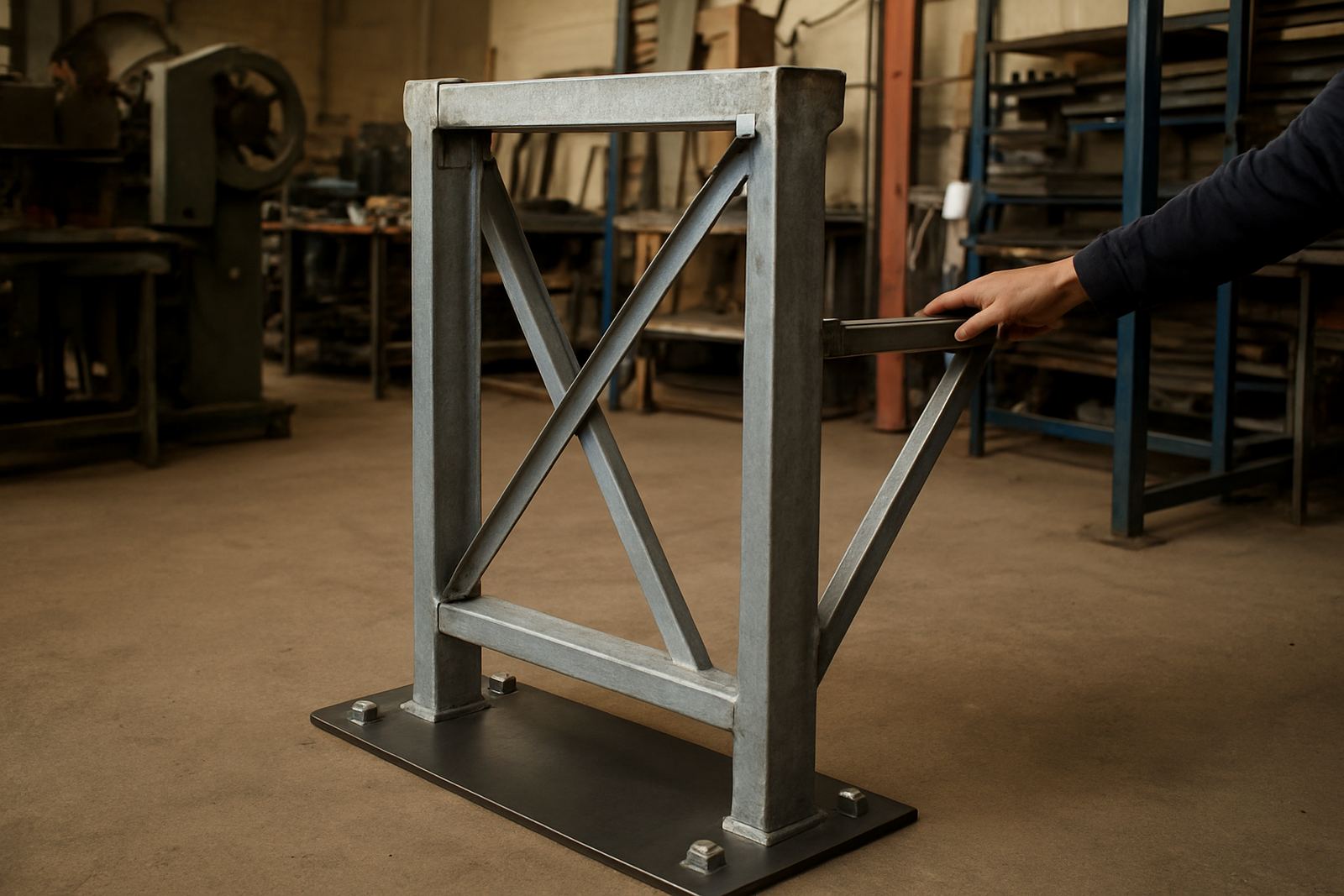
For coastal business sites, the frame material, plate thickness, coating system and anchoring detail all matter. Galvanised steel, properly sealed joints and a solid concrete footing are usually better value than a cheaper build that starts rusting after the first wet winter. We see this often where a sign is fine for a few months, then the finish begins to blister and the fix becomes more expensive than the original job.
Also plan for load-shedding. If the sign will be lit, keep the electrical system simple and serviceable, with access for maintenance and replacement parts that can be reached without dismantling half the structure.
Choose the Right Face Size and Readability
People do not read pylon signs like a brochure. They catch them in motion, often in low light or traffic. That is why the face size, letter height and contrast are more important than decorative detail. A long business name, for example, may need to be shortened to a practical version that can be read at distance.
As a rule, the higher the viewing speed and the farther the sign sits from the road, the simpler the message should be. One clear logo, one line of text and a contact or directional cue is often enough. Too much copy turns a roadside sign into clutter and the whole point is lost.
- Keep the message short and readable from the street.
- Use strong contrast between text and background.
- Allow for night viewing if the site is busy after dark.
- Avoid crowded layouts with too many phone numbers or slogans.
- Match the sign face to the actual viewing distance, not the board size alone.
A good pylon sign should still make sense when a driver sees it for two seconds at speed.
Allow for Lighting, Power and Maintenance Access
Lighted pylons need more than a bright face. The wiring path, power point, access panels and repair method should be planned before manufacture begins. If the sign sits inside a landscaped verge or close to a boundary wall, maintenance access becomes an issue later on. Nobody wants to remove paving or trim back shrubs every time a tube, LED module or transformer needs attention.
We usually recommend that the sign be planned with servicing in mind. That means enough internal space for electrical components, safe access for a technician and a way to open the face without damaging the frame. In winter, when rain and wind are stronger, a sign that is hard to service will be neglected. That leads to dim sections, water ingress and a tired look at street level.
At Blouberg Signz & Engineering, our workshop team handles sign manufacture, installation and sign maintenance, so the practical details can be checked together. That is often where a pylon project is saved from costly redesign later.
A Local Example From Table View to Parklands
Take a business property in Table View that needs to be visible from both the main road and the side access used by deliveries. A mid-height pylon placed too close to the boundary wall may look fine on a sketch, but on site it gets hidden by traffic, parked cars and the angle of approach. The better solution is often a slightly taller structure with a wider footing and a cleaner line of sight from both directions.
That same job might also need a simple illuminated face for early morning and after-hours traffic, plus a durable finish for the salty air. If the sign also has to fit around existing fencing, paving and stormwater runs, the setout becomes a proper site job rather than a generic build. That is where practical experience matters more than guesswork.
- Measure the view from the road, not only from the gate.
- Map the footing around services and drainage.
- Confirm the driver approach from both directions.
- Allow space for trucks, taxis and turning traffic.
- Plan the installation around the site’s daily operations.
For businesses in Parklands, Milnerton or Durbanville, the same method applies. A pylon sign should fit the property, the traffic and the local conditions, otherwise it becomes an expensive obstacle instead of a proper landmark.
When Engineering and Signage Need to Work Together
Some pylon signs are straightforward. Others need engineering input because of size, wind exposure, custom brackets or cut-to-size components. That is where a workshop that handles both signage and engineering plastics can help. We can machine parts, make engraved panels, shape housings and prepare components to suit the sign rather than forcing the sign to fit standard parts.
For businesses in Cape Town, Blouberg, Milnerton and Montague Gardens, the real value is in getting the build right before installation starts. A solid plan reduces site delays, keeps the structure neater and helps the sign last longer. If you want a roadside sign that is practical as well as visible, start with the site, the wind and the rules first, then the artwork.
That order saves money and usually gives a better result, especially on commerical properties where the sign has to work every day, not just on day one.