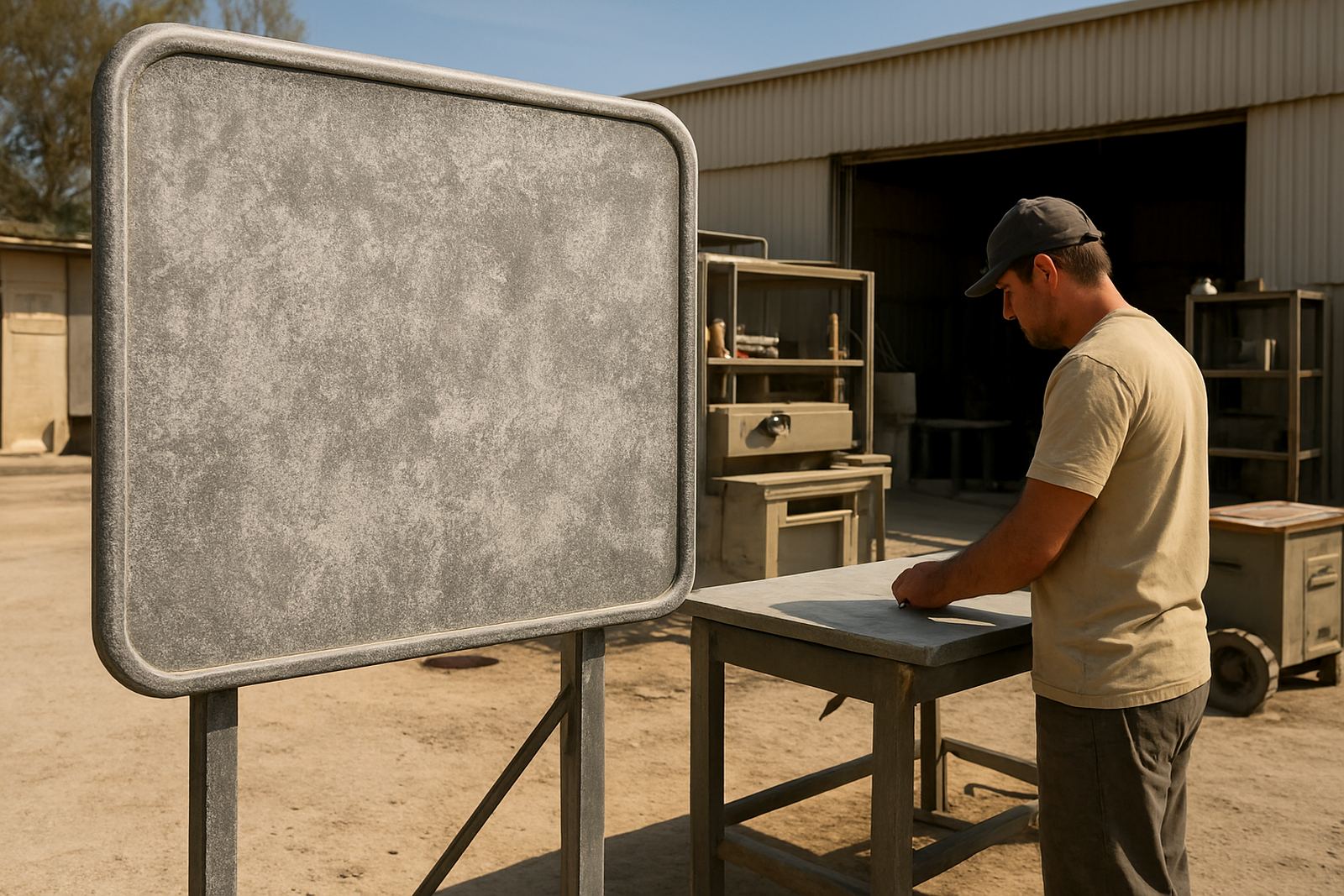
Start with a quick walk-by every month
The easiest way to stay ahead of sign damage is to look at it regularly. A monthly walk-by is usually enough for most business premises in Table View, Milnerton and the wider Cape Town area, especially where coastal wind, salt in the air and summer sun work on finishes every day.
Stand across the road first, then go in close. That gives you two views: what customers see and what a technician will need to inspect. If the sign looks crooked, patchy or dim from the street, it is already telling you something.
- Check for fading, peeling vinyl or cracked faces
- Look for movement in brackets, frames and fixings
- Notice any rust stains, water marks or white powder on metal parts
- Check that illuminated signs are lit evenly after dark
Look for the small faults that become bigger repairs
Most sign failures start with small changes. A screw works loose, a seal splits, a cable wears, or one corner starts lifting in the wind. Left alone, those small faults lead to water ingress, electrical trouble or a panel that can come loose during a gusty spell.
In coastal areas like Blouberg and Parklands, salt air can speed up corrosion on mild steel fixings and exposed edges. Even a neat sign can start to fail at the back, where nobody sees it until it becomes a safety issue. This is where regular maintenance saves money.
- Check seals around light boxes and cabinet joins
- Inspect exposed screws, bolts and rivets for rust
- Look for lifting edges on printed panels and cut vinyl
- Listen for rattling in windy conditions
Treat illuminated signs as electrical equipment too
Light boxes and other illuminated signs need more than a visual check. Flickering, dim sections or colour differences can point to failing components, poor connections or moisture inside the unit. In some cases the whole sign still works, but not safely or consistently.
Before load-shedding made backup power more common, many businesses only noticed a lighting fault after dark. Now it is worth checking signs both in normal power and when the backup system kicks in. That way you can see whether the unit performs properly under load and whether any lights fail during changeover.
- Check for flicker, delayed start-up or dead sections
- Inspect the housing for heat marks or moisture
- Confirm the sign is securely mounted and not vibrating
- Make sure access panels close properly after any service
Clean it properly, not aggressively
Cleaning sounds simple, but rough cleaning causes plenty of damage. Strong solvents can dull plastics, wash out print, or leave cloudy marks on clear covers. High pressure water can force moisture into seams and electrical compartments. A soft cloth, mild detergent and sensible rinsing are usually enough for most signs.
For roadside signs and shopfront faces, regular cleaning also helps with legibility. Dust, diesel film and sea spray can build up quickly near busy routes and industrial areas. If a sign is readable from 50 metres on a clean day, it should still be readable after a month of normal weather.
- Use non-abrasive cloths and mild soap
- Avoid pressure washing into joins and cable entries
- Do not scrape printed graphics with hard tools
- Rinse and dry around metal edges to reduce spotting
Check structure and mounting before the wind does
A sign can look fine while still being under strain. Frames bend a little over time, wall fixings loosen, and poles or arms can shift after repeated wind loading. In exposed parts of Table View and Blouberg, the first sign of trouble is often a slight tilt or a new vibration at night.
If a sign is mounted above a walkway, entrance or parking area, its condition matters even more. A loose panel or corroded support is not just untidy, it is a hazard. Any sign with visible movement should be taken seriously and inspected before it progresses into a larger repair.
- Check that the sign sits level and true
- Look for cracks in mounting points and wall plugs
- Inspect poles, arms and brackets for corrosion
- Make sure there is no repeated movement in strong wind
Know when maintenance becomes replacement
Not every ageing sign should be patched again and again. If the face is badly faded, the frame is rusted through, or the lighting system has reached the point where repairs keep stacking up, replacement may be the better option. The same applies when a sign no longer matches the business image or is too small to read clearly from the road.
A good maintenance review should help you decide whether to repair, refurbish or replace. In practice, that means looking at the sign’s age, the condition of the materials, the cost of the next repair and whether the sign still does the job it was installed for. A sign that is safe, neat and readable saves a business from looking neglected.
For companies across Milnerton, Durbanville, Montague Gardens and Paarden Eiland, a simple checklist can prevent complaints, reduce downtime and keep the frontage looking professional through the year.