Why Accurate Shopfront Measurements Matter
A fascia sign is usually one of the first things people notice about a business, so the sizing has to fit the building properly. If the panel is too small, the sign can look lost on the frontage. If it is too big, it can clash with doors, windows, cornices or municipal requirements and the final result may need costly changes.
For businesses in Table View, Milnerton, Blouberg and Parklands, the building type matters as much as the wording. We see tiled retail units, steel framed centres, freestanding offices and industrial premises in Montague Gardens and Paarden Eiland. Each one needs a slightly different approach, because the usable area and fixing points are never quite the same.
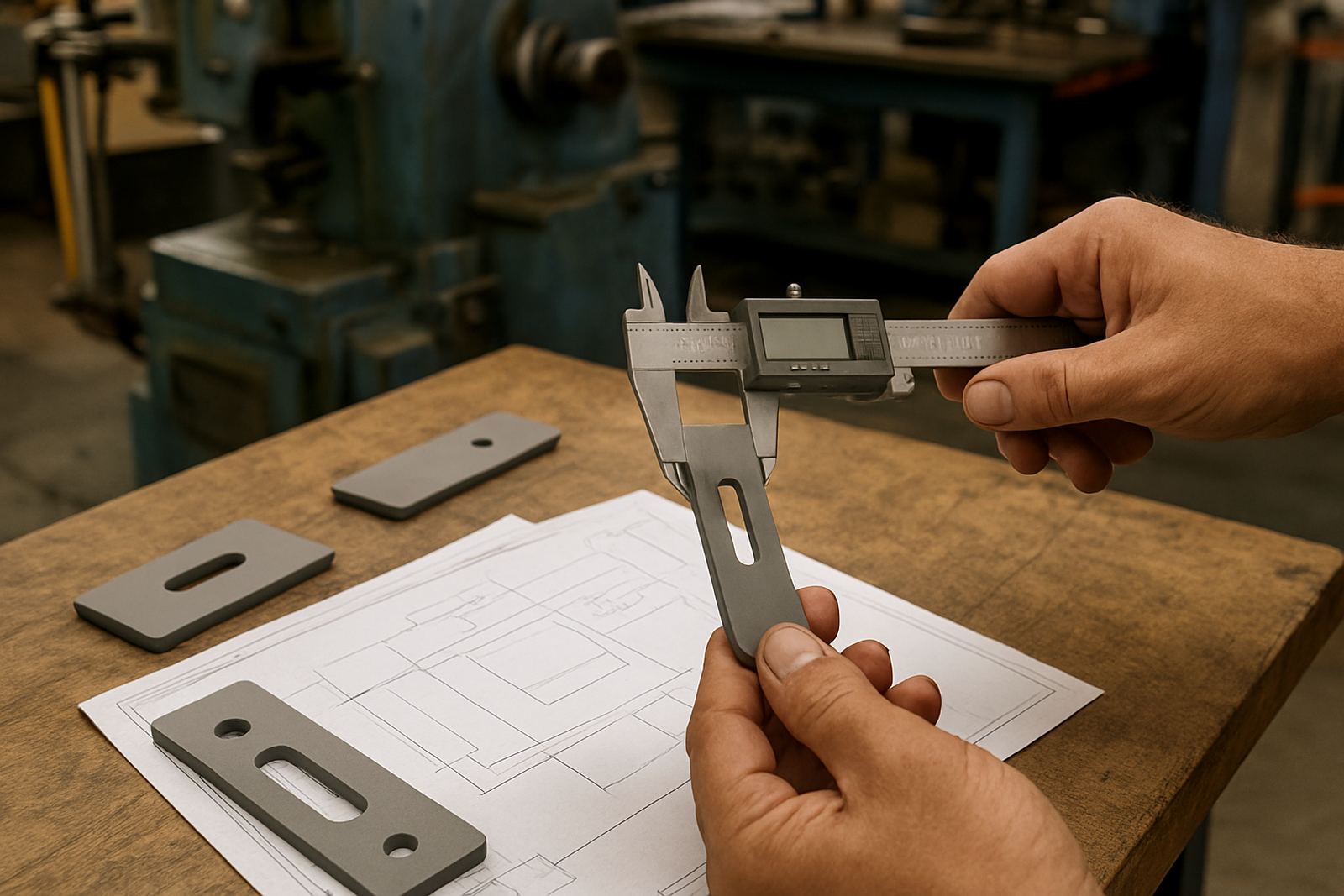
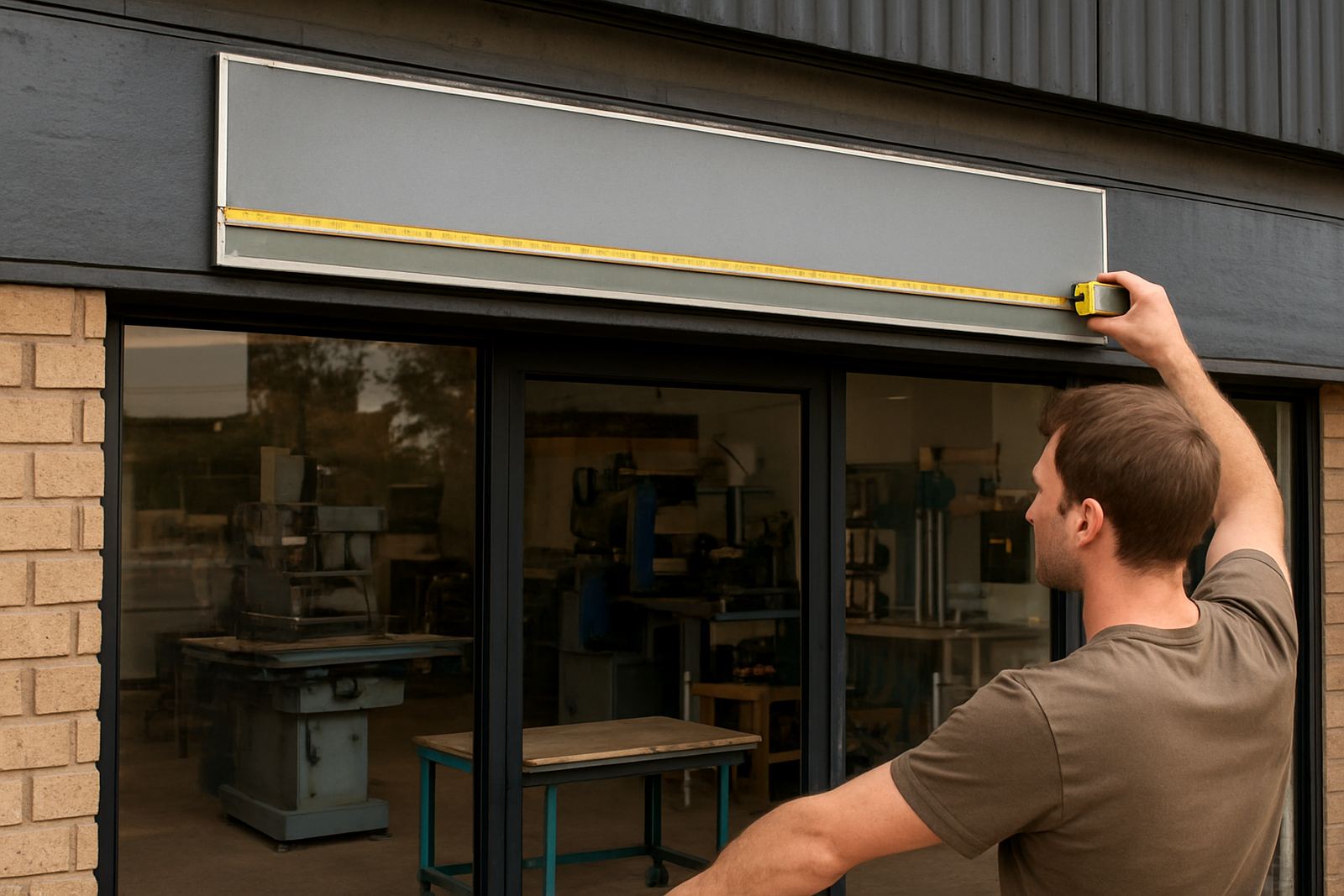
The most useful measurements are the clear sign area, the available wall height, and anything that limits the sign like roller shutters, security beams or existing piping. Even a small detail like a light fitting can change how the sign is made and installed. It is better to measure once, properly, than to guess and hope for the best.
The Basic Measurements We Need First
When you ask for a quotation, these are the first sizes that help us work out the sign correctly:
- Overall width of the wall or fascia area
- Overall height of the space available for the sign
- Height from ground level to the bottom edge of the proposed sign
- Width and height of any existing sign panel, if one is already there
- Distance from the sign area to doors, windows, gates or gutters
It also helps to know whether the sign is going onto brick, cladding, concrete, steel or a timber frame. That affects the fixing method and sometimes the weight of the sign panel too. For light boxes and illuminated signs, we need to know where power can be brought in and whether there is space for cable routing, especially on older sites where the installation has to be neat and weather-safe.
If you are replacing an old sign, measure the visible face and also the backboard or frame behind it. Some older shopfronts in Cape Town have been patched over several times, so the actual usable area can differ from what you see at first glance.
What to Measure for Fascia Signs and Wall Signs
Fascia signs and wall signs often sound similar, but the measuring approach is slightly different. A fascia usually sits in a defined band above the shopfront, while a wall sign may need to fit around windows, shutters or structural joints. If the sign is part of a larger frontage, we need to see how far it can run without interfering with the building lines.
For fascia work, measure the full span between the end points of the sign zone and note any visible trim or beam. For wall-mounted signage, measure the open section of wall and check if it is flat enough for the material selected. Not every wall is perfectly straight, and that matters when we manufacture panels, route letters or prepare mounting points.
Useful site notes to send with your enquiry:
- Whether the building is single-storey or double-storey
- Any height restrictions for access equipment
- Whether the shopfront is inside a centre or facing the street
- If the sign needs to be seen from a road, courtyard or pedestrian entrance
A common issue in coastal areas like Blouberg and Table View is wind exposure. A sign that looks fine on paper may need stronger fixings or a different structure if it faces the sea breeze head-on. That is one of those small things that can change both price and installation method.
Photos and Site Details That Make Pricing Accurate
Measurements are important, but photos are often just as useful. A clear front-on photo of the shopfront, plus a wider shot showing the full building line, gives us a better sense of scale. If there is an existing sign, a close-up helps us see how it is fixed and whether there are holes, brackets or power points to work around.
When clients in Durbanville or Montague Gardens send us a quote request, the best set of details usually includes the following:
- One front photo from across the road or parking area
- One close-up of the sign area
- One photo showing the left and right edges of the frontage
- A note about access hours, security rules or loading bay limits
- Any body corporate or landlord approval requirements
If the sign is on a centre facade, ask whether the mall or landlord has a signage guideline. These rules often cover size, colours, projection, lighting and fixing positions. Getting that information early avoids changes after manufacture has already started, which saves both time and Rand.
Local Example: A Parklands Retail Front
Here is a typical example. A retailer in Parklands needs a new fascia sign above a glass frontage. The wall section measures 4,8 metres wide and 720 mm high, but there is a fire indicator light in one corner and a roller shutter box running across the top. The useful sign area is therefore smaller than the full wall section, even though the frontage looks open at first glance.
In that case, we would measure the clear visible area, allow for the fixing points, and decide whether the sign should be a flat panel, cut lettering or a light box. If the shop faces a busy road, we also check readability from a moving vehicle. Letter height, contrast and spacing all matter more than people think, especially on a frontage where drivers only have a few seconds to take it in.
We often advise clients to stand where the customer or passerby will stand, then take a photo from that angle. It gives a far better sense of what the sign needs to do. A sign can be technically correct but still feel too small if the viewing distance is longer than expected.
When the Measurement Affects the Final Finish
The sizes you give us also influence the materials and finish we recommend. A small indoor office sign may suit a slim panel or engraved sheet, while a larger exterior fascia may need a stronger backing and weather-resistant face. Near the coast, we also look at corrosion exposure and colour fade over time, because salt air can be hard on fittings and metal edges.
These are some of the details that can change the build:
- Wind load and fixing strength
- Whether the sign is lit or non-lit
- Outdoor exposure to rain, sun and sea air
- Need for rear access or front access during maintenance
- Allowance for municipal or centre approval dimensions
If you need vehicle branding, safety signage, engraving or cut to size plastics at the same time, we can often combine the work from one set of measurements. That helps keep the project tidy and reduces the chance of mismatched dimensions across different items. It is a practical way to keep the job moving, especially when the opening date is close.
How to Send Us the Right Information
The easiest way to start is to send your measurements, a few photos and a short note about what you want the sign to do. Tell us where the sign will go, the size of the wall or fascia, and whether it is for a storefront, office, warehouse or workshop entrance. If you are not sure about the sizes, we can still help, but better details usually mean a quicker and more accurate quotation.
For clients across Table View, Milnerton, Blouberg, Parklands, Durbanville, Montague Gardens, Paarden Eiland and wider Cape Town, the process is the same. Good measurements save time on quoting, manufacturing and installation. They also help us plan for ladders, access equipment, power connection and any site-specific rules before we arrive.
In short, measure the space, photograph the frontage and note any obstructions. That is the best starting point for a fascia sign or wall sign that fits properly and presents the business the way it should.