Check the fixings first
Start with the parts that hold the sign in place. Look for rust on screws, movement in brackets, cracked wall plugs, bent angle iron and any fixings that have worked loose. If a sign rocks in the wind or makes a clattering sound, it needs attention before the season picks up.
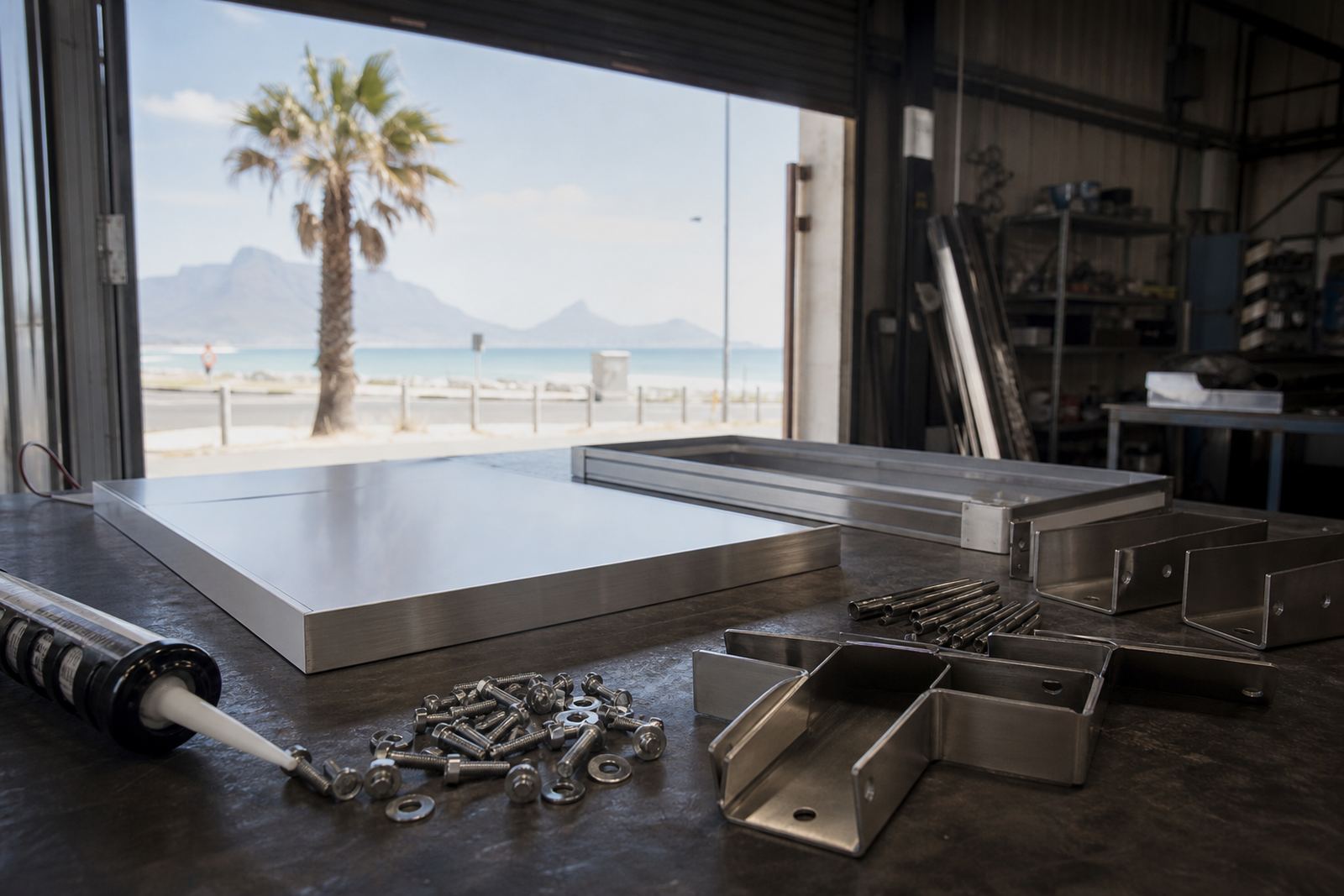
On coastal sites, we prefer hardware that stands up to salt air. Stainless fasteners, proper anchors and the right spacing make a big difference when the summer south-easter starts pushing hard across exposed corners and high façades.
Inspect light box faces
Light box faces should sit tight, with no bulging, splits or lifted edges. If the face is ageing, the retaining system is weak, or the seal has started to fail, wind can get inside and put pressure on the whole box.
We also check for fading, water marks and dead spots in the lighting. A face that looks fine from the ground can still have a loose corner or a weak clip that shows up as soon as the wind gets up.
Look closely at pylon panels
Pylon signs take a lot of wind load because they stand tall and catch air from every angle. We check panel fixings, internal framing, access doors, base plates and any signs of flexing at the joints.
If a panel has started to chatter, bow or open at the edges, it is worth opening up the structure and checking what is happening inside. Small faults are easier to correct before the holiday rush and the January restart.
Use a simple site checklist
- Check all visible screws, bolts and pop rivets.
- Look for rust streaks, cracks and loose seals.
- Test for movement by hand where it is safe to do so.
- Inspect faces, panels and corner joints for lifting.
- Make sure access points and covers are secure.
We use a practical approach, because a quick visual look is not always enough. A sign can look straight from the street and still have a weak fixing hiding behind the panel or inside the frame.
Plan repairs before shutdown
November is also the month when many businesses start planning for the festive break. If a sign needs new fixings, a replacement face or a panel repair, it is better to schedule it now than chase it in mid-December when suppliers, installers and site access can all be tighter.
For Table View, Blouberg and nearby coastal areas, a pre-summer check is part of good maintenance. It keeps your sign safer, your branding looking sharp and your site ready for the busiest stretch of the year.