Fleet branding brief for a busy Montague Gardens operation
The client was a local service business working out of Montague Gardens and sending vehicles across Cape Town every week. Their fleet already did the job on the road, but the branding was inconsistent from one vehicle to the next, which made the company look less organised than it really was. The brief was straightforward: standardise the appearance of the fleet, improve visibility at customer sites and make sure every vehicle looked like part of the same operation.
They wanted graphics that could handle daily use, regular washing and the mixed conditions we get between industrial areas and the coast. That meant choosing materials that would hold colour in strong sun, stay put through wind and dust, and still look clean after long periods of use. The fleet also had different body shapes, so the design had to work across more than one vehicle type without looking forced.
What we measured, planned and confirmed before production
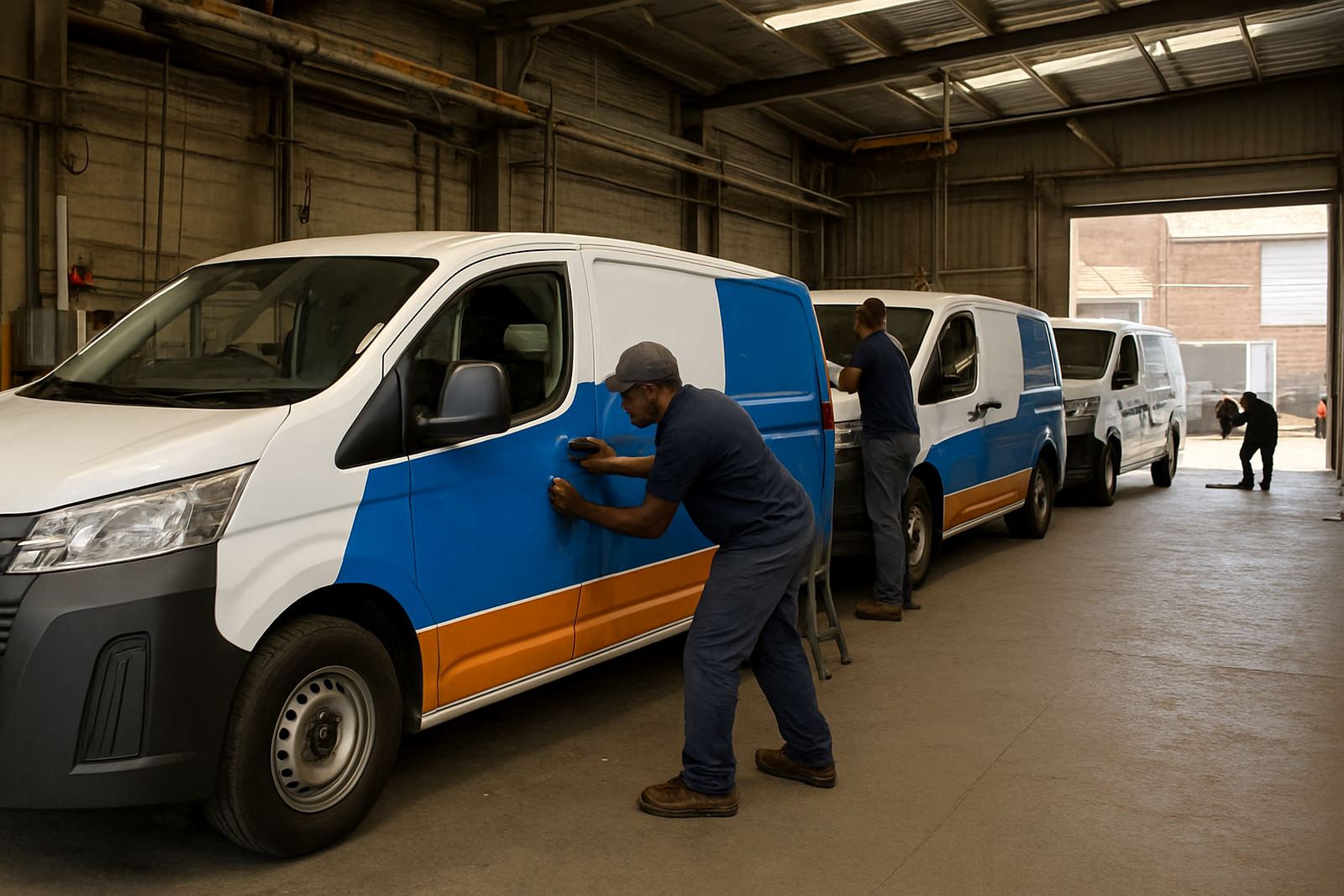
Before we cut anything, we checked each vehicle for panel sizes, door handles, curves, window lines and existing markings. That step matters on a fleet job because one wrong measurement can throw off the whole set. We also confirmed where the company name, contact details and service lines needed to sit so the branding would be readable from a distance and still tidy at close range.
- Vehicle count and model mix were confirmed first, then each unit was measured individually.
- Artwork was adjusted for door gaps, wheel arches, mirrors and fuel caps.
- Colour matching was checked so the fleet looked consistent across every vehicle.
- We planned the installation order to keep downtime as short as possible.
The client needed the work done in a way that would not knock their daily schedule off balance. So we set the job up in stages, with design approval, print preparation, cutting and fitting all sequenced around vehicle availability. It kept things moving without leaving half the fleet out of action at once.
Materials and installation built for Cape Town conditions
For this project we supplied printed vehicle graphics, cut lettering and fitted branding panels suitable for long-term outdoor use. The material choice was based on the realities of local service vehicles: sun exposure, salt air, frequent stops, and wash-downs after muddy or dusty jobs. The finish needed to stay sharp in the coastal belt from Montague Gardens through to Blouberg and Milnerton, where moisture and wind can wear on lower-grade applications fast.
We installed the graphics by panel, working carefully around seams, contours and door movement. Where a section needed extra attention, we used smaller pieces rather than forcing oversized film across a difficult shape. That gives a cleaner result and helps the edges stay down properly. We also checked every door opening and handle area so nothing caught or lifted when the vehicle was in normal use.
- Durable printed vinyl for full colour branding.
- Cut vinyl lettering for names, phone details and service wording.
- Application on flat and curved sections for a clean fit.
- Final inspection after fitting to check alignment and edge adhesion.
Timeline and rollout across the fleet
Week one covered measurements, artwork setup and approval. Week two was production, including print, cutting and preparation of the components for each vehicle. Week three was installation and final checks. That timeline suited the client because it allowed us to work steadily without rushing the finish or holding the vehicles for too long.
Fleet work often falls over when the schedule changes midstream, so we kept the communication tight and the sequence clear. If a vehicle was in use on a given day, we simply moved to another unit and kept the production side advancing. That approach saved time and avoided unnecessary down-time. It also meant the client could keep their service team on the road while the branding was being completed.
Results on the road and at customer sites
Once the fleet was completed, the whole set of vehicles looked like one business instead of a mix of individual units. That consistency made the company easier to recognise on the road and gave customers a cleaner first impression when the vehicles arrived on site. It also helped the client present a more settled, established operation without changing any of the practical vehicle functions.
From a working point of view, the branding was applied so it could be maintained with normal washing and regular use. The client wanted something that looked good on day one but would still hold up after weeks of traffic, weather and repeated parking in industrial areas. The result met that brief and gave them a repeatable branding standard for any future vehicle additions.
- Better fleet consistency across all vehicles.
- Improved visibility in traffic and at client premises.
- A cleaner, more professional appearance for daily use.
- Graphics designed to be practical to clean and maintain.
What we would repeat for the next fleet wrap job
If we were doing this kind of project again, we would keep the same process: measure every vehicle properly, lock the design early and fit in a controlled order. That is the safest way to handle a mixed fleet, especially when the vehicles are working through busy areas like Montague Gardens, Paarden Eiland and the greater Cape Town industrial belt. A rushed wrap almost always shows up later in the fitment, so the planning has to be solid from the start.
For fleet branding jobs, we also recommend allowing room for future changes such as new vehicles, updated contact details or added service wording. It is much easier when the original layout has been set up with that in mind. In this case the client now has a clear visual standard they can carry forward as the fleet grows, and that saves time on the next round of branding.
Key facts
| Project type | Fleet vehicle graphics and branding standardisation |
|---|---|
| Client area | Montague Gardens, Cape Town |
| Service scope | Design, print, cut and installation |
| Fleet size | Multiple service vehicles |
| Timeline | 3 weeks from brief to completion |
| Materials | Printed vinyl and cut vinyl lettering |