
Brief from a busy Paarden Eiland workshop
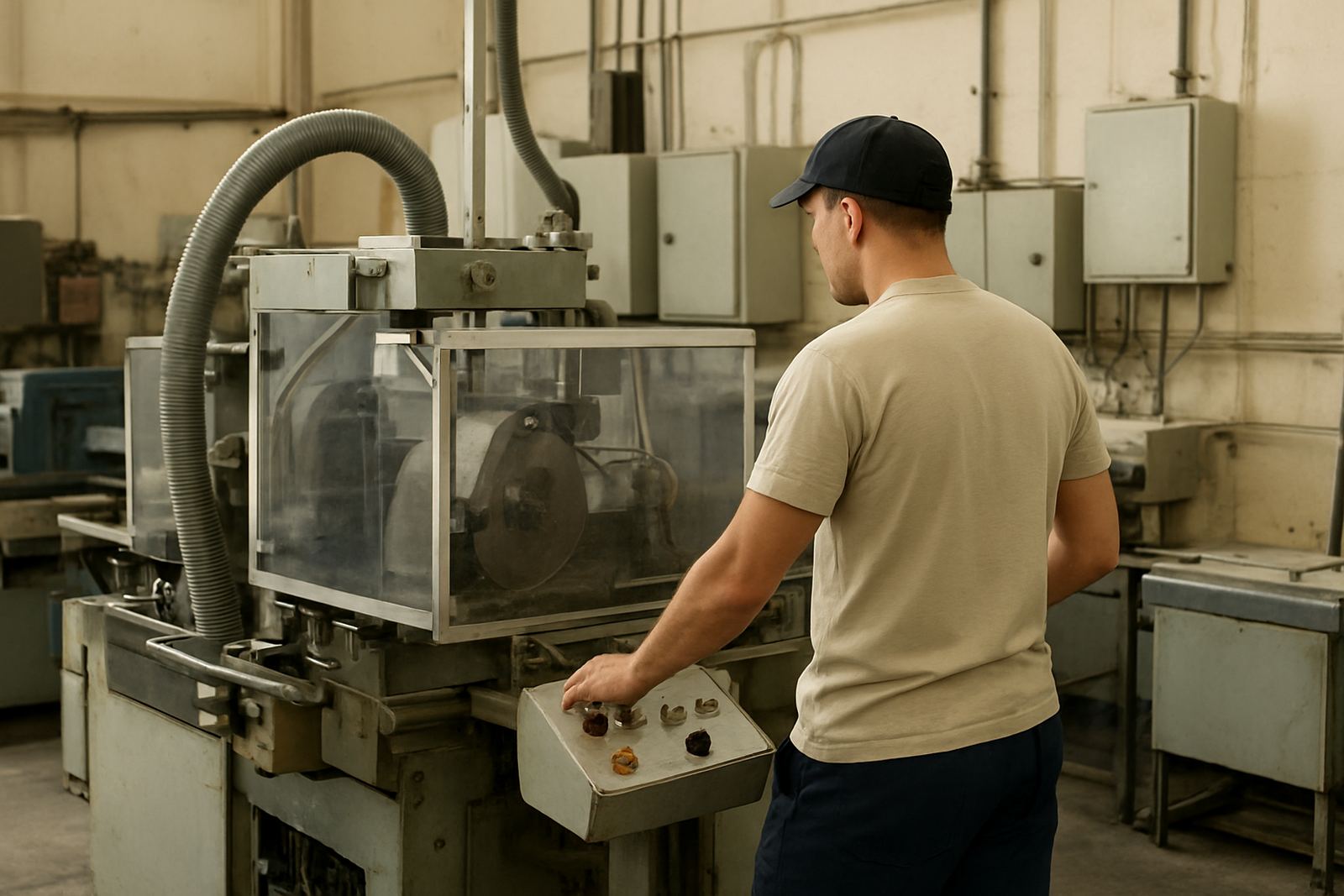
The client was a light industrial workshop in Paarden Eiland that needed replacement parts for machines, jigs and general repairs. The main ask was simple enough: supply cut-to-size engineering plastics and machined wear parts that could be fitted quickly, with no long downtime and no fuss on site.
They were dealing with repeated wear on guides, spacers, sliders and mounting pieces. Some of the parts were no longer worth trying to repair, while others had to be copied from existing samples and adjusted slightly for better fit. The workshop also needed parts that could cope with dust, vibration, oil and frequent handling.
- Client type: industrial repair workshop
- Area: Paarden Eiland, Cape Town
- Use case: workshop maintenance and machine repairs
- Order type: repeatable cut parts plus machined replacements
What made the job tricky
The biggest constraint was downtime. The workshop could not afford to pull equipment apart for long, and any part that arrived slightly oversize or with a poor finish would create more delay than the original fault. There was also limited room for error because several parts had to match existing fixing points and slide faces exactly.
Coastal conditions added another layer. In Paarden Eiland, salt air, humidity and day-to-day grime can affect both fixings and moving parts, so material choice mattered. We selected engineering plastics suited to wear resistance and dimensional stability, then checked thickness, hole placement and edge finish before release. Loadsheding was also factored into the planning, so cutting and machining were grouped to reduce interruptions when power was available.
- Old samples were measured and checked against the machine housings
- Critical dimensions were kept tight for fit and alignment
- Material was chosen for wear, low friction and workshop handling
- Cutting and machining were sequenced to reduce delay if power cut out
Materials and machining supplied
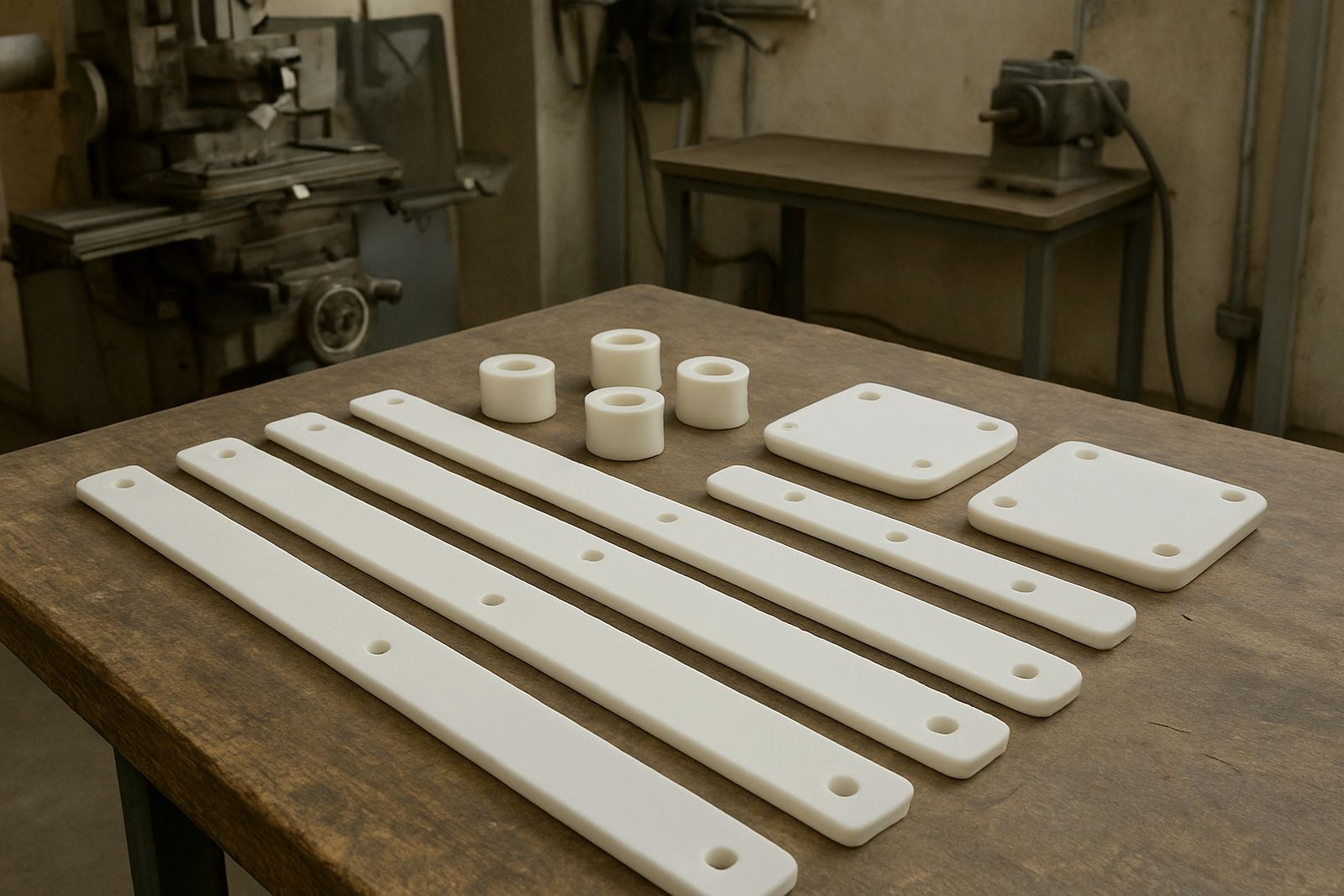
We supplied a mix of cut-to-size engineering plastics and machined parts made in our Table View workshop. The job included flat blanks, drilled spacers, guide pieces, wear strips and shaped components with routed edges. Where required, we added engraved marks for identification so the workshop could tell similar parts apart during maintenance.
Each piece was prepared to suit the application rather than just cut to a standard rectangle. That meant hole centres had to line up with existing frames, radiused corners were used where stress could build up, and edges were finished so they would not catch on gloves or cables. The result was a set of parts the team could fit straight into place.
- Cut-to-size plastic sheet sections for repair stock
- CNC routed wear parts for guide and slide applications
- Drilled and countersunk fixing holes where needed
- Engraved part marks for workshop identification
- Smooth edge finishing to reduce snagging and chipping
How the project was handled from start to finish
The project ran over two weeks from first measurement to final collection. In week one we received the sample parts, confirmed sizes and discussed how each part was used in the workshop. After that we marked up the drawing set and started machining the first batch. Week two was used for checking, finishing and producing the balance of the order.
Because these were functional parts, the workshop wanted practical feedback rather than theory. We checked wear surfaces, confirmed clearance on moving sections, and made sure the parts could be handled with standard tools already in use on site. A few items were adjusted after dry fitting, which saved time once the machines went back into service.
- Week 1: sample review, measurements and material selection
- Week 1: first cut and trial fit preparation
- Week 2: final machining, finishing and part labelling
- Week 2: collection and handover for installation by the client team
Results after the repairs
The workshop got parts that fitted properly, lasted better than the worn originals and could be replaced again in the future if needed. That mattered because not every machine in Paarden Eiland is still supported by an easy off the shelf replacement. A well made copy keeps the equipment going and avoids unnecessary rebuilds.
Once fitted, the new parts restored proper alignment and removed the slack that had been causing uneven wear. The maintenance team also appreciated having a small spare set on hand for the next service cycle. It cut down on emergency sourcing, which is always a problem when a part fails late on a Friday.
- Reduced downtime during workshop repairs
- Improved fit on worn machine contact points
- Better repeatability for future maintenance orders
- Simple replacement process for the in-house team
What we would do again on the next order
For this kind of job, we would follow the same process again: measure from the actual parts, confirm the wear pattern, choose the plastic by application and keep the machining practical. In a working workshop, it is better to supply the right part once than to keep revising a near miss.
We would also keep one extra set of critical wear pieces on file for the client, along with the dimensions that matter most. That makes future orders quicker and helps if the workshop needs a repeat batch after a machine service or a change in use. Good records save time and keep repairs moving.
- Keep sample parts for future repeat manufacture
- Record hole centres, thicknesses and edge profiles
- Match material to heat, wear and cleaning conditions
- Plan cutting in batches to suit load-shedding windows
Key facts
| Project location | Paarden Eiland, Cape Town |
|---|---|
| Client type | Industrial workshop |
| Scope | Cut-to-size engineering plastics and machined wear parts |
| Lead time | 2 weeks |
| Process | Measure, machine, finish, dry fit |
| Typical parts | Guide pieces, spacers, wear strips, drilled blanks |