What a vehicle wrap does for your fleet
A vehicle wrap covers part or all of a vehicle with printed and cut vinyl graphics that carry your logo, contact details, services and colours. It turns plain transport into visible branding that works in traffic, at client sites and when a vehicle is parked outside a store, depot or office.
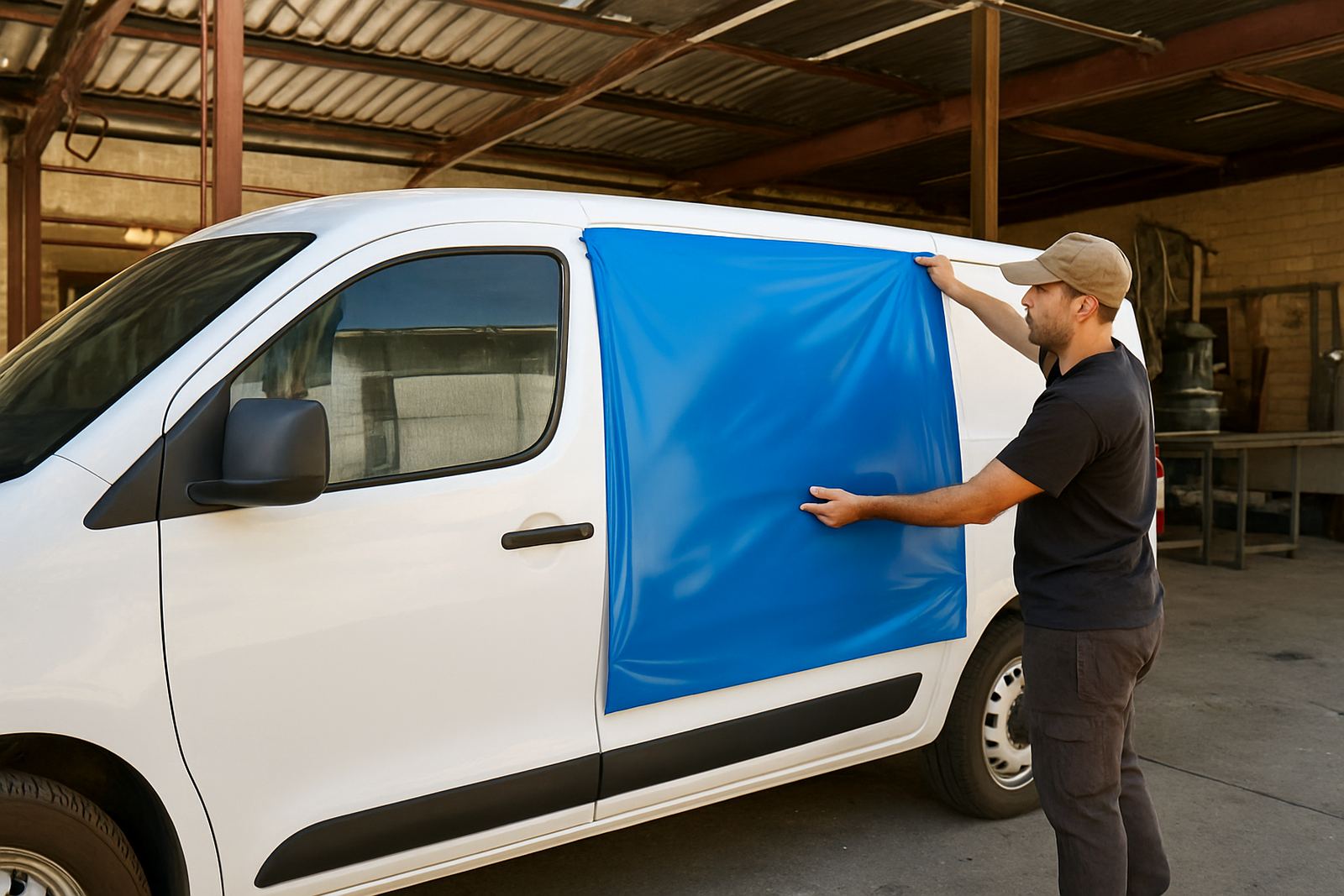
We supply full wraps, partial wraps, door graphics, bonnet panels, rear door branding and reflective safety decals where needed. For service bakkies and delivery vans, a partial wrap is often enough to make the vehicle stand out without covering every panel. For larger fleet work, a full wrap gives the most coverage and a more uniform finish.
- Full wraps for maximum coverage
- Partial wraps for cost control and faster turnaround
- Simple logo and contact details for small business vehicles
- High visibility branding for fleet consistency
Vehicle types, sizes and wrap options
We work on most commercial vehicles used around Cape Town, including single-cab bakkies, double-cabs, panel vans, compact delivery vans and light trucks. Each vehicle is measured on site or from clear photos and dimensions, because door handles, curves, rub strips, canopy fittings and windows all affect the final layout.
Wrap material is selected to suit the body shape and the expected use. Flat panels take print cleanly, while deeper recesses and rivet lines need careful planning. For vehicles that carry tools, ladders or stock, we often recommend a durable partial wrap with bold side panels and rear branding so the message stays visible even when the vehicle is dirty.
- Typical wrap coverage: 20% to 95%
- Standard panel coverage: doors, tailgates, side panels and rear quarters
- Graphics can include matte, gloss or clear laminated finishes
- Suitable for one vehicle or an entire fleet
Where wraps work best in daily use
Vehicle wraps suit businesses that spend time on the road and in public view. They work well for plumbers, electricians, contractors, delivery services, maintenance teams, logistics operators, refrigerated transport and service companies that move between suburbs, industrial areas and coastal routes. In Table View and Milnerton, a branded vehicle is often seen many times a day in traffic and at client premises.
They are also useful for businesses that want cleaner presentation without repainting every vehicle. If the vehicle is leased, a wrap can be removed later with the right care, which helps if you are managing a mixed fleet or changing branding over time.
- Good for fleet vehicles, bakkies and vans
- Useful for leased vehicles and temporary campaigns
- Suitable for work in coastal humidity and sun exposure
- Helpful for businesses with frequent site visits
Installation on your vehicle and what is needed on site
Wrap installation is done on a clean, dry vehicle with paint that is in sound condition. We need enough workspace for the vehicle to stand still while panels are cleaned, measured, applied and trimmed. A shaded area helps, but indoor installation is better in strong wind or dusty conditions common near industrial zones and busy roads.
No power or gas is needed from the client side for a standard vehicle wrap job. We use our own tools and equipment for preparation and fitting. If you are bringing a fleet vehicle in for branding, make sure it is washed but not freshly polished or waxed, because that can affect adhesion. Any loose trim, damaged paint or rust should be checked before installation so there are no surprises later.
- Vehicle must be clean and dry before fitting
- No wax, silicone polish or heavy road grime
- Best results on paint in good condition
- Power and gas are not required on site
Care, washing and servicing after a wrap
A wrapped vehicle needs regular washing to keep colours clear and edges free of grime. Use cool or lukewarm water and a mild soap, then rinse well. High pressure washing is allowed, but keep the nozzle back from the edges and seams. Avoid harsh solvents, petrol wipes and abrasive pads. In coastal areas, salt and dust can build up faster so regular cleaning helps the wrap last longer.
If a section lifts, gets damaged in a knock or starts to fade unevenly, it should be checked early. Small repairs are usually quicker and cheaper than leaving a panel open to wind and dirt. We also help with maintenance checks where fleet vehicles need a tidy-up after repairs or panel replacement.
- Wash regularly with mild soap
- Do not use harsh cleaners or abrasive sponges
- Keep pressure washers away from lifted edges
- Ask for a repair if a panel is damaged or peeling
What to verify before you order a light box sign
Before ordering vehicle branding, have your logo files, contact details and any required wording ready. It helps to confirm the exact vehicle make, model, year and body style, because a single panel van and a high-roof van can have very different usable areas. If you need registration numbers, service wording or safety notices included, say so up front so the layout is set correctly from the start.
Check whether you want full coverage or a lighter partial wrap, and whether the vehicle will need to match an existing fleet. If you are working to municipal or site rules, such as safety wording or company identification on the doors, let us know early. Final approval should be given on the layout before production starts, since changes after printing can add cost and slow the job.
- Confirm vehicle type, year and body shape
- Provide logo files and contact details
- Decide between full wrap and partial wrap
- Check any site or municipal identification rules
Key facts
| Service type | Full wraps, partial wraps and fleet branding |
|---|---|
| Common vehicles | Bakkies, panel vans, delivery vans and light trucks |
| Coverage options | 20% to 95% of vehicle body area |
| Finish options | Gloss, matte and laminated print |
| Installation needs | Clean vehicle, dry surface, shaded or indoor space |
| Best use areas | Table View, Milnerton, Blouberg, Parklands, Durbanville and Cape Town |